Pressure Reveals Priorities
When people protest, power responds sometimes too late, sometimes without listening. In Angola, the cracks in governance show what happens when policy forgets people. Elsewhere, deadlines are set not just to control conflict, but to force clarity like Trump’s demand for progress on Ukraine peace talks. And in the background, markets rise, even as uncertainty lingers. The S&P 500 and Nasdaq hit new highs, but gains mean little if they float above unresolved tension.
These moments don’t just tell stories, they reveal choices. Who gets protected. What gets prioritized. And whether the systems we depend on are strong enough to carry both growth and justice at the same time.
Protests Turn Violent in Angola as Fuel Price Hike Sparks Public Unrest

Angola is witnessing a wave of violent protests following a recent diesel price increase that has fueled widespread public frustration over rising living costs. The demonstrations began earlier this week in the capital city, Luanda, and have since spread to several provinces, reflecting deeper tensions within one of Africa’s largest oil-producing economies.
Local media and civil society organizations report that the protests intensified on Monday as hundreds of residents took to the streets demanding the reversal of the government’s fuel pricing policy. The unrest turned violent in parts of Luanda when demonstrators clashed with security forces deployed to disperse the crowds. Eyewitnesses confirmed that roads were blocked, tires were burned, and several shops were looted in the process.
While the exact number of injuries remains unconfirmed, multiple reports indicate that dozens of protesters were detained. Authorities have not released an official statement on casualty figures or arrests, but the atmosphere in the city remains tense, with increased police presence in high-traffic areas and near government offices.
The Angolan government announced the fuel price hike as part of a broader fiscal strategy aimed at reducing subsidy costs and narrowing the national budget deficit. Diesel prices reportedly rose by over 50 percent within a short period, placing additional financial strain on households and transport operators. For many residents, the increase has triggered deeper concerns about inflation, food prices, and unemployment, all of which have worsened since the COVID-19 pandemic and subsequent oil market disruptions.
Although Angola is a significant crude oil exporter, it relies heavily on imports for refined fuel products. This dependency has exposed the country to global price shocks and placed pressure on public finances. In response, the government has pursued a policy of gradual subsidy removal under its economic reform program, supported in part by international lenders.
However, critics argue that the transition is unfolding without adequate social cushioning. Many Angolans already face challenges affording basic goods and services. Public transport fares, food costs, and utility bills have all surged in recent months, heightening frustration among low-income communities.
Several advocacy groups have called for dialogue between the government and citizen representatives to avoid further escalation. They are demanding targeted relief measures, including fuel vouchers for commercial drivers, food assistance for vulnerable households, and transparency in how fuel revenues are managed.
Angola’s Ministry of Finance has not yet issued a statement on whether it will review the price adjustment or introduce compensatory mechanisms. Analysts note that the government faces a difficult balancing act between addressing public discontent and meeting its fiscal targets under current economic constraints.
Regional observers are watching the situation closely, particularly in other oil-dependent African economies facing similar subsidy reform dilemmas. The protests in Angola serve as a sharp reminder of the social risks involved when economic policy shifts are not matched with inclusive public engagement and support systems.
As of Tuesday morning, calm had returned to parts of Luanda, but civil society leaders say further demonstrations are possible in the coming days if public demands remain unmet. The situation continues to develop.
Trump Sets 10–12 Day Deadline for Russia to Advance Ukraine Peace Talks

U.S. President Donald Trump has issued a firm ultimatum to the Russian government, setting a 10 to 12-day deadline to show concrete progress in peace negotiations over the war in Ukraine. If Russia fails to meet this timeline, the United States will move forward with expanded secondary sanctions aimed at cutting off global demand for Russian oil a move expected to have far-reaching implications across international markets.
The announcement came on Monday during a high-level security briefing at the White House, where President Trump reiterated his administration’s commitment to applying sustained diplomatic and economic pressure on Moscow. According to senior officials, the U.S. government has been monitoring a new round of talks between Russian and Ukrainian representatives, hosted discreetly in Geneva and facilitated by neutral intermediaries.
“These are the final days to choose diplomacy over further global isolation,” said a senior administration source familiar with the matter.
If the Kremlin fails to meet Washington’s conditions which include a ceasefire verification mechanism and a roadmap for humanitarian corridors the new sanctions would target financial institutions, ship insurers, and crude oil buyers in countries still purchasing Russian petroleum, including India, Turkey, and parts of Southeast Asia.
The proposed sanctions package, currently under review by the U.S. Treasury and State Departments, would significantly tighten compliance expectations for companies that move, process, or insure Russian energy cargoes. This would extend beyond Western jurisdictions to include firms operating in non-aligned regions.
The administration believes this approach will reduce Moscow’s ability to finance its military efforts in Ukraine without triggering immediate supply shocks in global oil markets. Crude prices dipped slightly following the news, as traders weighed the possible enforcement measures and potential responses from affected nations.
The deadline marks a shift from earlier multilateral strategies employed under the European Union and G7 frameworks. By applying unilateral pressure through secondary sanctions, Washington hopes to force both urgency and clarity into what has become a stalled negotiation process. U.S. allies have expressed cautious support, although some European leaders are concerned about potential retaliation by Russia, particularly in the energy and cyber sectors.
Meanwhile, the Ukrainian government has welcomed the U.S. position. In a statement from Kyiv, officials thanked Washington for its “unwavering commitment” to ensuring territorial integrity and peace, but stopped short of confirming the details of ongoing negotiations.
Moscow has not publicly commented on the deadline but has previously dismissed foreign-imposed timelines as “political theater.” Analysts note that Russia’s leverage remains partially intact due to its large energy reserves, extensive trade ties with non-Western nations, and continued access to alternative markets. However, further sanctions could tighten liquidity in Russian financial institutions and restrict its economic maneuvering space.
As the countdown begins, diplomatic efforts continue behind the scenes. The White House has not ruled out backchannel communications with Moscow or future high-level talks involving third-party mediators. However, senior aides emphasized that the next 10 to 12 days are critical to determining whether diplomacy remains viable or whether the U.S. will escalate economic measures further.
The situation remains fluid, with key meetings scheduled this week in Washington, Brussels, and Geneva.
S&P 500 and Nasdaq Reach Record Highs Despite Global Market Caution
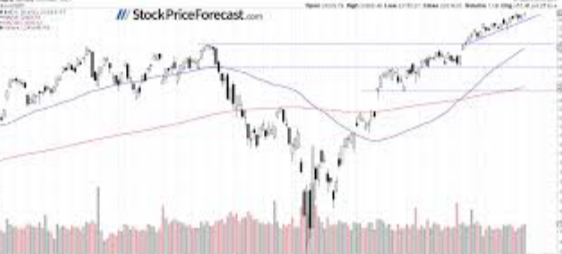
The S&P 500 and Nasdaq Composite indices surged to record highs on Monday, extending a rally that has seen the S&P 500 close at all-time highs for six consecutive sessions. Despite mixed global economic signals and investor caution, U.S. equity markets remained resilient, bolstered by strong corporate earnings and optimism around potential interest rate guidance from central banks.
The S&P 500 climbed 0.6 percent, closing at a new record of 5,460.43, driven by gains in technology, consumer discretionary, and healthcare stocks. The Nasdaq Composite also advanced by 0.8 percent to settle at 18,098.35, marking its third consecutive record close. The Dow Jones Industrial Average, by contrast, dipped slightly by 0.1 percent, weighed down by declines in industrial and energy sectors.
Investors remained attentive to corporate earnings reports from key technology firms, including Alphabet and Microsoft, both of which are scheduled to report this week. Anticipation around artificial intelligence-related earnings and forward guidance continues to play a central role in sustaining the market’s upward trajectory.
At the same time, investor caution was visible in other areas. Trading volumes were moderate, and analysts described market behavior as choppy, reflecting broader uncertainty about the global macroeconomic outlook. Markets across Europe and Asia traded mostly flat, with investors awaiting fresh policy signals from central banks, including the U.S. Federal Reserve, the European Central Bank, and the Bank of Japan.
Federal Reserve officials have maintained a cautious tone in recent public comments, with several governors suggesting that more evidence of sustained inflation moderation is needed before rate cuts can be considered. The Fed is set to meet next week, and while no change in rates is expected, market participants are looking for any hint of a shift in tone.
The European Central Bank, meanwhile, is weighing its next move amid slowing growth in Germany and persistently weak demand in Southern Europe. In Japan, the Bank of Japan has reaffirmed its commitment to maintaining an accommodative stance, but faces pressure to manage currency volatility amid a weakening yen.
Back in the U.S., key economic data due later this week including GDP growth estimates and the personal consumption expenditures index are expected to offer clearer insights into inflation trends and consumer activity. These indicators could shape expectations ahead of central bank meetings in August and September.
Despite the cautious tone in global markets, analysts credit the U.S. equity rally to resilient domestic consumption, strong earnings from major sectors, and continued enthusiasm around tech innovation. Large-cap technology firms, particularly those involved in AI infrastructure and cloud services, have outperformed expectations throughout the year.
Market strategists, however, are urging investors to remain grounded.
“This is a momentum-driven environment, but it is also extremely data-sensitive,” said a financial analyst based in New York. “Any disappointing signal from the Fed or earnings season could trigger a pullback.”
For now, market sentiment remains tilted toward optimism, as traders look ahead to more earnings reports and potential central bank commentary in the coming days.