Where Innovation Meets Reality: A Crossroads of Progress, Limits, and Urgency

In today’s trio of stories, we witness the double-edged truth of technological advancement: brilliance tempered by boundaries.
The disappointing results from the global AI coding challenge remind us that intelligence alone doesn’t equal engineering competence. Generative models are powerful, but context, judgment, and systemic understanding remain firmly human. It’s a call for tempered expectations — and smarter integration.
Meanwhile, Google Photos shows how AI can amplify everyday creativity, turning simple snapshots into dynamic memory reels. In that quiet evolution lies AI’s real strength — not in replacing people, but in helping them tell better stories, faster.
And then there’s Nigeria, standing at a digital crossroads. CSEA’s report pulls no punches: the country’s AI ecosystem is ripe with promise but undermined by gaps in access, trust, and regulation. It’s not just about technology — it’s about national direction.
Together, these stories sketch a global tension. AI is moving fast, but not always forward. Whether you’re coding a system, sharing a moment, or drafting a national strategy, the question is the same: Who’s in control — the code, or the people behind it?
The future isn’t just built by innovation. It’s shaped by how honestly we confront its limitations.
First Results from New AI Coding Challenge Raise Concerns About AI’s Real-World Readiness
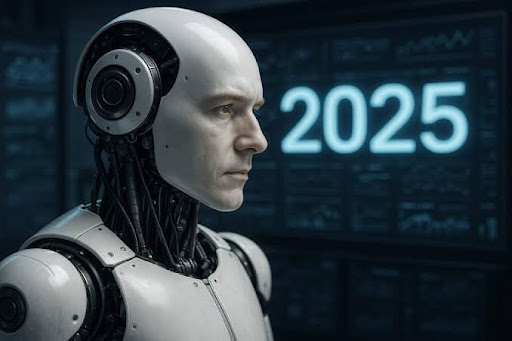
A new AI benchmark meant to test real-world software engineering skills has just released its first wave of results and the findings are more sobering than spectacular. Despite the buzz surrounding advanced generative AI models, many struggled with tasks that human junior developers routinely complete.
The challenge, launched earlier this year by a coalition of academic researchers and industry developers under the banner “The Open Coding Initiative,” set out to evaluate AI models not just for syntax accuracy, but for architecture, code maintainability, and execution across a range of realistic programming scenarios. Over 200 coding problems were included, each mimicking tasks developers face in production environments from backend service integration to debugging and version control collaboration.
The results reveal a steep drop in performance when AI is asked to go beyond prompt-to-function translation. While models like GPT-4, Claude, and Gemini excelled in isolated code generation tasks, they fumbled significantly on multi-file projects, API documentation comprehension, and long-term memory integration. In one task involving a simple full-stack CRUD application with authentication, no AI agent was able to complete the challenge end-to-end without human correction.
Where the Machines Fell Short
In addition to functional gaps, reviewers noted frequent logical inconsistencies, an inability to follow nuanced instructions, and poor adherence to industry-standard best practices. For example, AI often hardcoded values instead of dynamically referencing data, used deprecated libraries, and sometimes introduced critical security vulnerabilities, particularly in tasks involving user input or encryption.
The challenge also tested code quality metrics such as readability, modularity, and test coverage. Here again, AI models showed clear weaknesses. Human reviewers rated more than 60% of submissions as “unmaintainable,” a startling number considering these same tools are already being deployed in production environments.
Implications for AI Coding Assistants
These findings reignite the growing debate about how far generative AI has truly come in replicating or augmenting human software engineers. While tools like Copilot, CodeWhisperer, and ChatGPT have rapidly gained traction as productivity boosters, this challenge underscores their limits as autonomous coders.
“It’s not that AI can’t code , it’s that it doesn’t yet understand the broader engineering context,” said Dr. Salma Adeyemi, one of the lead evaluators from the University of Toronto. “It can write clever one-liners, but engineering is about understanding systems, users, and the long-term consequences of design choices. That’s still a human domain.”
The Road Ahead
Despite the disappointing results, researchers behind the challenge insist that the exercise was never about catching AI out, it was about measuring progress honestly. In response, several labs have pledged to adjust training data and fine-tuning strategies to focus more on long-term memory, iterative reasoning, and real-time collaboration features that human developers rely on every day.
Meanwhile, some companies are doubling down on hybrid workflows, where AI serves as a co-pilot but not the pilot. The message from the challenge is clear: AI might write snippets, but it can’t yet ship software.
Google Photos Introduces New AI Tools for Turning Pictures into Dynamic Video Stories

Google Photos is taking digital memories to the next level with a newly launched feature that allows users to transform still images into vibrant video creations — all with the help of AI.
The update, now rolling out globally, enables users to remix their photos into short, stylized video clips complete with transitions, music, and effects. Whether it’s a vacation album, birthday celebration, or everyday snapshots, the new feature automatically weaves together visual narratives that feel curated and cinematic.
AI-Powered Storytelling Made Simple
Using machine learning and content recognition, Google Photos can now identify faces, group related images, and suggest themes — like “Weekend with Friends” or “Sunset Moments.” Users can select a group of photos, and with a few taps, watch them morph into a lively video reel. Google’s AI even syncs the transitions to music, adding emotional pacing and polish.
The tool also includes a “Remix” option, letting users edit existing creations with new images, filters, or audio. This keeps the content dynamic and personal — a major step beyond the auto-generated Memories the app has offered in the past.
Designed for Sharing in a Reels-First World
The move signals Google’s push to keep pace with how users now consume and share visual content — short-form video. By making it easy for anyone to create engaging videos without editing skills, Google Photos is bridging the gap between static galleries and social-ready clips.
“Photos are only part of the story,” said Julia Tran, a senior product manager at Google Photos. “People want to share moments, not just images. This tool lets your memories move.”
Okonjo-Iweala’s CSEA Releases Groundbreaking Report on AI Adoption in Nigeria

The Centre for the Study of the Economies of Africa (CSEA), a research think tank co-founded by Dr. Ngozi Okonjo-Iweala, has published a major new report examining the state of artificial intelligence adoption in Nigeria — and the findings are both illuminating and urgent.
Titled “AI in Nigeria: Promise, Pitfalls, and Pathways,” the study maps out the current landscape of AI development and deployment across sectors, highlighting the opportunities for national transformation and the risks of digital exclusion.
A Nation at the AI Crossroads
Drawing from interviews, case studies, and data collected over the past year, the report reveals that AI technologies are gaining ground in sectors like fintech, health diagnostics, agriculture, and customer service. However, the use is largely concentrated among tech startups and urban-based institutions, leaving vast rural and public sectors untouched by the wave of automation and smart tools.
“AI is not just about code and computation,” said Dr. Chukwuma Onyimadu, lead researcher at CSEA. “It’s about power, governance, and inclusion. Nigeria stands at a critical juncture where the right policies could turn AI into a catalyst for equitable development.”
Key Findings: Talent, Trust, and Infrastructure Gaps
While there’s growing enthusiasm around AI, the report flags several challenges:
- Skills Gap: There is a severe shortage of AI professionals within the country. Most companies rely on outsourced expertise or imported technologies.
- Data Quality and Access: Local datasets are either lacking or poorly structured, making it difficult to build context-aware models.
- Regulatory Vacuum: Nigeria still lacks a comprehensive AI policy or data governance framework, raising ethical concerns about surveillance, bias, and job displacement.
- Low Public Awareness: Outside the tech ecosystem, most Nigerians have limited understanding of what AI is, how it affects their lives, or what protections they have.
Opportunities for Local Innovation
Despite these hurdles, CSEA’s report outlines several promising developments. Nigerian startups are leveraging machine learning to predict crop yields, diagnose illnesses in remote areas, and automate logistics in chaotic urban centers. Lagos and Abuja are emerging as AI hubs, drawing attention from international investors and research partners.
The report urges the federal government to act quickly by investing in AI education, local language data training, inclusive innovation grants, and a rights-based regulatory framework.