Signals in the Noise: Power, Perception, and the Push for Smarter Engagement
In today’s trio of headlines, one theme echoes through the noise: the delicate dance between trust, innovation, and control in a rapidly transforming world.
NASA’s stern rebuke of Event Horizon Protocol’s marketing campaign reminds us how easily fiction, when dressed as fact, can erode institutional credibility. In an age where misinformation spreads faster than science itself, the boundaries between immersive storytelling and reckless manipulation grow dangerously thin. The agency’s anger wasn’t just about logos or leaks—it was a warning shot to industries that flirt too closely with public trust.
Meanwhile, the Japanese stock market’s 2% surge—powered by a new U.S.–Japan trade deal—reflects how swiftly global alliances and economic clarity can shift momentum. For Japan’s auto giants, the deal is more than a tariff reprieve; it’s a reassertion of industrial relevance in a world chasing electric dreams and geopolitical security. It’s also a signal that diplomacy and strategic capital still have the power to rewrite financial narratives overnight.
And then there’s Catdi Printing’s Print Pal—a quiet but significant entry in the AI arms race. While not as headline-grabbing as trade deals or sci-fi scandals, the launch of a free AI tool for print marketing speaks volumes about where the future of business is headed: personalized, automated, and deeply local. It’s proof that even traditional sectors can reinvent themselves when they embrace technology with intention rather than fear.
Together, these stories paint a vivid picture of a world negotiating the terms of its future—where institutions defend integrity, economies bet on cooperation, and entrepreneurs build smarter bridges between the old and the new.
NASA Slams Sci-Fi Blockbuster Over Misleading Marketing Stunt
In a rare public rebuke, NASA has expressed frustration over a recent marketing campaign for a new science-fiction movie that the agency claims misused its brand and credibility to generate buzz. The film, Event Horizon Protocol, set for a global release this Friday, sparked controversy after its promotional team launched a viral campaign falsely suggesting NASA had discovered evidence of extraterrestrial life.
The campaign, which took off across social media and niche conspiracy websites, included a series of cryptic videos, “leaked” mission briefings, and even staged press releases implying that NASA had classified documents confirming an “interstellar anomaly” near Jupiter. The materials were designed to appear authentic, bearing doctored NASA logos and terminology consistent with real missions, prompting genuine confusion—and concern—among the public.
NASA Responds: “Our Name Is Not a Marketing Toy”
In a strongly worded statement released on Monday, NASA said:
“We categorically deny any involvement with the claims presented in these materials. NASA is committed to transparency and scientific integrity. The unauthorized use of our name and visual identity in a fictional marketing campaign is misleading and deeply irresponsible.”
The agency emphasized that it was not consulted or informed about the campaign and warned that such tactics erode public trust in scientific institutions.
NASA administrator Bill Nelson reportedly contacted the film’s distributor, NovaScope Studios, demanding an immediate end to the campaign and a public clarification from the studio.
Studio Backs Down—Sort Of
NovaScope Studios has since issued a lukewarm apology, stating that the marketing was intended to “immerse fans in a speculative universe” and “spark curiosity about space exploration.” However, it stopped short of accepting full responsibility, arguing that all materials eventually directed viewers to official movie pages and were marked as fictional.
This explanation has not satisfied many at NASA, or in the broader scientific community.
Dr. Rae Lovinski, an astrophysicist and science communicator, criticized the campaign on X (formerly Twitter), writing:
“When you mimic official channels and fabricate discoveries under a real agency’s name, that’s not storytelling—it’s misinformation.”
A Familiar Problem in Hollywood
This is not the first time Hollywood has faced backlash from scientific organizations. Films like The Cloverfield Paradox and Prometheus have drawn criticism in the past for using fake science and government references to stoke curiosity. But few have gone as far as Event Horizon Protocol, which included a fabricated “NASA scientist” in TikTok interviews claiming life had been found “under Europa’s icy crust.”
Buzz or Backlash?
Ironically, the controversy may be fueling more attention for the film. Ticket pre-sales have increased 27% since the story broke, and online searches for “Event Horizon Protocol + real or fake” have spiked dramatically.
Still, experts warn that the short-term gain for the studio may come at the long-term cost of public confusion and diminished trust in real scientific communication.
As Dr. Lovinski put it: “In a time when conspiracy theories already dominate discourse, the last thing we need is fiction disguised as fact. Hollywood must do better.”
Japanese Automakers Fuel Nikkei Surge After U.S. Trade Breakthrough
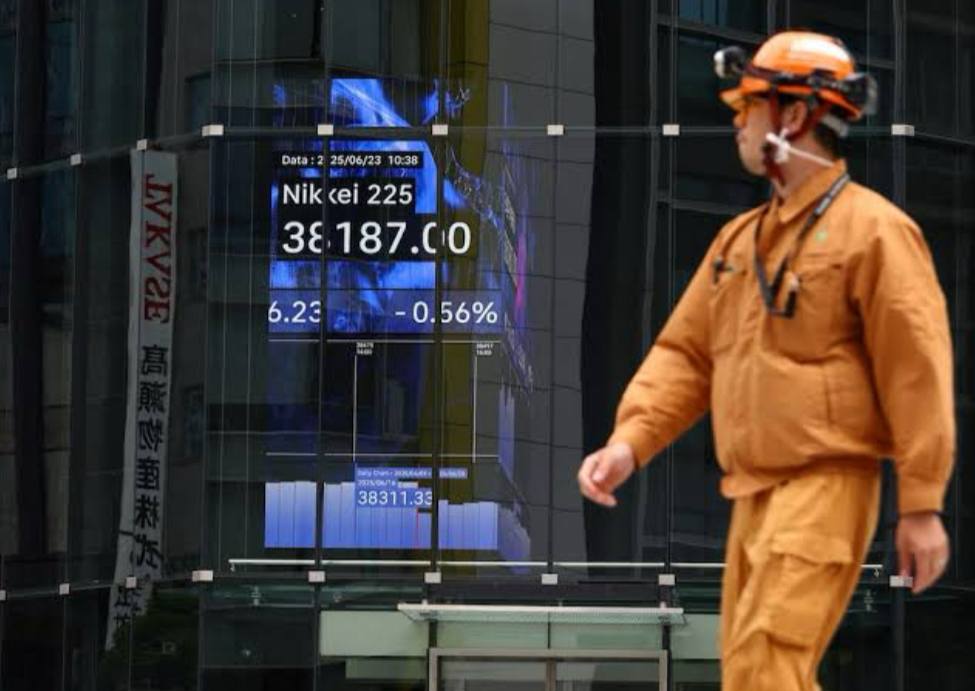
Japan’s stock market roared back to life on Wednesday, as shares of major automakers surged following the announcement of a landmark U.S.–Japan trade deal. The Nikkei 225 index jumped more than 2%—its strongest single-day performance in over a year—driven by explosive gains from Toyota, Honda, Nissan, Mazda, and Subaru.
The sharp rally came after the U.S. government confirmed it would significantly reduce planned auto import tariffs on Japanese vehicles, capping them at 15% instead of the feared 25% or more. This move, part of a broader economic pact between the two countries, sent investor confidence soaring across Japan’s transport and manufacturing sectors.
At the heart of the agreement is Japan’s commitment to a $550 billion investment into key areas of the U.S. economy, including electric vehicles, artificial intelligence, semiconductors, and advanced manufacturing. The deal is seen as a stabilizing force after months of trade-related tensions that had weighed heavily on Japanese exporters, particularly those in the auto industry.
Toyota led the charge on the Tokyo exchange, with its stock climbing 13% as analysts swiftly upgraded earnings forecasts. Honda and Nissan followed closely, each gaining 9% as the market digested the implications of sustained access to the lucrative U.S. market. Mazda and Subaru also posted strong gains, with investor sentiment buoyed by the clarity and long-term growth potential offered by the trade accord.
The market’s reaction wasn’t limited to equities. Japan’s bond market saw a notable sell-off, pushing yields on the 10-year government bond to 1.59%—its highest level since 2008. Investors are increasingly betting that the Bank of Japan may be forced to accelerate its tightening cycle, with rising inflation expectations and international monetary pressures adding momentum. The Japanese yen slipped slightly against the U.S. dollar as capital flowed into equities and higher-yielding assets.
Banks also posted modest gains, benefiting from speculation that rising interest rates could improve margins and lending conditions in the coming quarters.
This trade agreement has far-reaching implications beyond financial markets. For Japan, it reaffirms its economic alliance with the U.S. at a time when global trade routes are shifting under pressure from climate regulation, technological decoupling, and geopolitical competition. For the auto industry, it provides a stable platform to push forward on electric vehicle investments, global exports, and supply chain recovery.
Dr. Naomi Fujita, a senior market strategist at Osaka Global Markets, described the moment as “a rare intersection of momentum and policy stability,” noting that Japanese exporters now have “a clearer runway to scale in a fragmented global economy.”
As the dust settles, today’s rally may be remembered not just as a reaction to tariffs but as a turning point for Japan’s economic narrative in 2025—a signal that strategic diplomacy, smart investment, and industrial resilience can still move markets in powerful ways. Blacksolvent will continue to monitor how these developments reshape investor behavior and manufacturing momentum across Asia and beyond.
Catdi Printing Launches ‘Print Pal’ — Free AI Tool Set to Revolutionize Print Marketing Campaigns

Catdi Printing, a Houston-based print and marketing company, has announced the launch of ‘Print Pal,’ a free AI-powered idea generator designed to help businesses and creatives develop smarter, more effective print campaigns. The move marks a major leap into the AI space for a traditional print company—and reflects a broader trend of merging automation with personalized design solutions.
With Print Pal, users can input basic campaign goals, industries, or customer types, and the platform will instantly generate customized print marketing strategies, including flyer concepts, postcard taglines, banner messages, and direct mail content ideas. Designed to support small businesses, solopreneurs, agencies, and marketers alike, the tool aims to make professional-level campaign brainstorming fast, intuitive, and affordable.
Chris Duda, founder and CEO of Catdi Printing, said the company created Print Pal to remove the guesswork and overwhelm often associated with print marketing in the digital age. “We’ve always been about giving small businesses access to big-brand quality,” Duda stated. “Print Pal is an extension of that mission—it democratizes smart marketing.”
Catdi Printing, already known for offering affordable web design and print solutions, now positions itself as a hybrid creative partner that blends human expertise with artificial intelligence. The new tool arrives at a time when companies are increasingly looking for ways to streamline marketing processes and increase ROI, especially with the rising costs of both digital ads and physical media.
Early adopters of Print Pal have praised its ease of use and relevance, noting how the tool helps users generate campaign ideas that are actually actionable and tied to real-world print products. While still in its initial rollout phase, Catdi has hinted that future updates will include integration with Canva, Adobe Express, and even mailing list personalization features.
The Print Pal launch also reflects a strategic move by Catdi to stake its claim in the evolving “AI for marketing” landscape, where big players like Canva, Adobe, and Mailchimp have already made notable strides. But unlike larger platforms, Catdi’s AI tool is uniquely focused on physical print—a niche that remains vital in industries like real estate, political campaigns, and local retail.
As the demand for print continues to intersect with the intelligence of machine learning, Catdi’s Print Pal could set a new precedent: one where strategy meets simplicity, and small businesses are no longer left behind in the innovation race.