When Nations Tremble: The Cracks Beneath Power, Protest, and Public Trust
In today’s unfolding events across three continents, the world once again finds itself grappling with the fault lines of fragile leadership, unchecked power, and citizens caught in the crossfire.
In Taiwan, the mass recall effort against opposition lawmakers is more than a procedural political exercise. It is a referendum on national identity, democratic integrity, and how far a country can stretch under the weight of foreign pressure. As China rallies support for the opposition, Taiwan’s people are asked to choose between paralysis and progress, between representation and resistance. Whether the vote ends in recall or retention, the soul of Taiwan’s democracy is on the line.
In Bangladesh, grief replaces routine, and classrooms become gravesites. The tragedy that struck Milestone School is a brutal reminder that the intersection of military carelessness and civic negligence can be fatal. But beyond the bloodstained uniforms and burned notebooks, a generation is awakening not just to demand justice, but to question the very systems that claim to protect them. The air force may call it a malfunction, but the people are calling it a failure of duty.
And in Brazil, the long shadow of Jair Bolsonaro continues to stretch over a divided nation. With his son’s assets frozen and the former president himself facing arrest over defiant communication breaches, the battle is no longer just legal , it is ideological. As Brazil teeters between accountability and authoritarian nostalgia, its judiciary is being tested on its ability to serve justice without becoming a political weapon. In a polarized world, even silence is a battlefield.
These stories, though scattered across the globe, converge on one truth: the institutions we trust-whether legislative, military, or judicial, are only as strong as the people who hold them accountable. In Taiwan, they vote. In Bangladesh, they mourn and rise. In Brazil, they fight for the rule of law. And in all three, the world is watching.
CHINA BACKS OPPOSITION AS TAIWAN PREPARES FOR HISTORIC PARLIAMENTARY RECALL
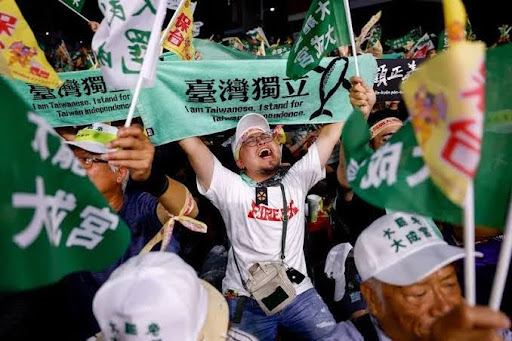
TAIPEI/BEIJING – Political tensions are reaching new heights in Taiwan as the self governed island gears up for its largest ever legislative recall vote this Saturday, targeting 24 lawmakers from the opposition Kuomintang (KMT) party. The campaign, backed by civic groups and quietly endorsed by the ruling Democratic Progressive Party (DPP), could significantly shift Taiwan’s legislative landscape and potentially reshape cross strait relations with China. In a move that has ignited further controversy, Beijing has publicly thrown its weight behind the embattled KMT, accusing the DPP of orchestrating what it calls a campaign of “green terror.”
The recall effort, which threatens nearly 20 percent of Taiwan’s 113 seat parliament, has stirred up fierce political debate. The targeted lawmakers, all members of the China-friendly KMT, have been accused by civil society organizations of obstructing defense spending, undermining democratic processes, and aligning too closely with Beijing’s interests. For a recall to succeed under Taiwan’s electoral law, more than half of participating voters must approve the motion, and voter turnout must exceed 25 percent of registered voters in each constituency.
Though the DPP has distanced itself from the direct organization of the recall drive, party officials and local activists have lent public support to what they describe as a necessary democratic correction. President Lai Ching-te, while officially taking a neutral stance, has recently launched a nationwide “Unite Taiwan” campaign focused on defending Taiwan’s democratic values amid growing foreign threats.
Meanwhile, Beijing’s reaction has been swift and pointed. Chinese officials and state run media have issued dozens of statements decrying the recall effort as politically motivated repression. Beijing has accused the DPP of exploiting the recall mechanism to dismantle the opposition and monopolize legislative power. Chinese propaganda outlets have framed the DPP’s actions as “authoritarian in nature” and have described the movement as a manifestation of “green terror” a reference to the DPP’s signature party color.
Reports from Taiwan’s Information Operations Research Group (IORG) reveal that more than 400 articles and video pieces criticizing the recall movement were published by Chinese state media in the first half of 2025 alone, signaling a coordinated information campaign by Beijing. Taiwanese officials have responded by accusing the Chinese Communist Party of interfering in the island’s internal affairs and attempting to sway public sentiment.
For the KMT, the stakes are existential. The party has called the recall effort malicious and has condemned the DPP for what it describes as “weaponizing democracy.” KMT leaders insist that their engagement with China is pragmatic and economically driven, not ideological or subservient. In response to the recalls, the party is mobilizing supporters across its strongholds, urging voters to reject the petitions and preserve legislative balance.
On the other hand, DPP supporters argue that the recall is a necessary measure to hold lawmakers accountable, particularly those who have blocked critical legislation related to national security and military preparedness. The DPP contends that the KMT has paralyzed legislative functions and prioritized appeasement of Beijing over the island’s sovereignty.
If a significant number of KMT lawmakers are successfully recalled—more than 12, according to analysts—the DPP could regain a working majority in parliament. This would enable President Lai’s administration to fast-track its stalled legislative agenda, including defense modernization bills that have been repeatedly obstructed. Any vacated seats will trigger by-elections within three months, and while the KMT may recontest these races, the outcome could further consolidate the DPP’s political influence.
This escalating political showdown comes at a time of heightened military tension, with Taiwan conducting large-scale defense drills in response to China’s continued military provocations near the Taiwan Strait. The convergence of political unrest and security threats underscores the fragility of the current moment.
As voters prepare to head to the polls, Taiwan’s democracy finds itself at a critical juncture. The outcome of the recall votes will not only determine the balance of power within the Legislative Yuan but may also shape Taiwan’s international posture and its resistance to Beijing’s growing assertiveness. For now, all eyes are on Saturday’s vote—a potential turning point in the island’s political future.
Grief and Outrage in Bangladesh as Fighter Jet Crash Turns School into ‘Death Trap
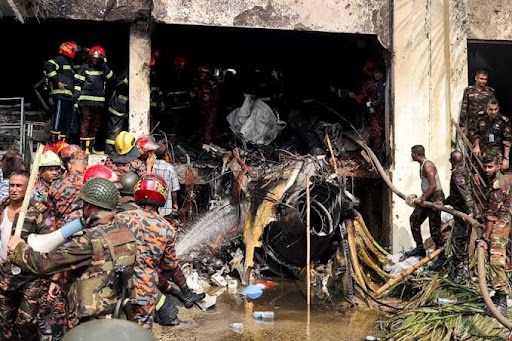
DHAKA – Bangladesh is in mourning following a horrific military plane crash that turned a bustling school campus in Dhaka into a tragic scene of destruction, killing at least 19 people—most of them young students—and leaving over 160 others injured. The catastrophe occurred on Monday afternoon when a Bangladesh Air Force F-7 BGI fighter jet slammed into Milestone School and College in the northern Uttara district of the capital.
The crash happened during regular school hours, turning what should have been a normal day of classes into a living nightmare. According to witnesses, the Chinese-made jet appeared to be in distress moments before it struck the two-storey school building near the junior section’s playground and canteen area, triggering an explosion followed by a massive fire.
Emergency responders and soldiers rushed to the scene, but the scale of the disaster quickly overwhelmed local resources. Students trapped in classrooms were pulled out with burns, broken limbs, and smoke inhalation injuries. Several of the wounded remain in critical condition at nearby hospitals. Due to an initial shortage of ambulances, some children were carried to hospitals in private vehicles and even on foot.
Survivors described the horror in vivid detail. “There was a loud bang, and then the air turned black with smoke,” said one student. “Everyone screamed and ran, but many of my classmates couldn’t get out.” Parents rushed to the school upon hearing the news, some finding their children wounded, others left searching through lists of the dead.
Among the confirmed fatalities were 16 schoolchildren, a teacher, and the pilot of the aircraft. The government has since declared Tuesday a national day of mourning, lowering flags to half-mast and suspending public activities. Chief Adviser Muhammad Yunus visited injured students in hospital and vowed a full investigation into the incident, promising financial and medical support for victims and their families.
The Bangladesh Air Force confirmed that the F-7 BGI was on a routine training mission and likely suffered a technical failure. While officials claim the pilot attempted to steer the aircraft away from residential areas, critics argue that such training exercises should never be conducted over densely populated urban zones.
Anger erupted across the country, especially among students and parents, who staged spontaneous protests demanding answers. At the center of their frustration is a haunting question: how could a military aircraft be allowed to fly above schools and neighborhoods in the first place?
“There were no warnings. No drills. No emergency exits. It was a death trap,” shouted one protester outside Dhaka Medical College Hospital. “This could have been prevented.”
This is not the first time Bangladesh’s aging fleet of F-7 jets has come under scrutiny. Monday’s crash marks the second incident involving the model this year alone, prompting aviation experts and human rights groups to renew calls for the immediate suspension of urban training flights and a broader review of military aviation policies.
Education authorities have postponed exams in the affected districts, and grief counselors have been dispatched to schools across the region. Meanwhile, thousands of citizens, including celebrities, cricketers, and activists, have flooded social media with tributes and calls for accountability.
As Dhaka reels from the tragedy, the charred ruins of Milestone School now stand as a symbol of institutional failure—and a painful reminder of how the intersection of military error and civic neglect can cost the lives of a generation.
The investigation continues, but for the victims and their families, no inquiry can undo the loss. What remains now is a nation in mourning and a growing movement demanding that such horror must never be repeated.
Brazil’s Political Drama Deepens: Eduardo Bolsonaro’s Assets Frozen as Former President Faces Arrest Over Social Media Violations
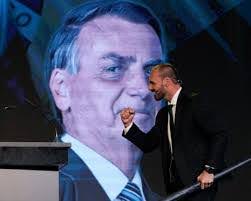
BRASÍLIA – Brazil’s democratic institutions are facing a new wave of political tension as the country’s Supreme Federal Court freezes the assets of Eduardo Bolsonaro, the son of former president Jair Bolsonaro, while threatening to arrest the ex-president himself for defying a court-imposed social media ban.
The latest developments stem from a broader investigation into Jair Bolsonaro’s alleged efforts to overturn his 2022 election defeat and his continued legal battles with Brazil’s top court. Justice Alexandre de Moraes, a key figure in the country’s judiciary, issued the freezing order against Eduardo Bolsonaro amid suspicions that the congressman had attempted to obstruct justice by soliciting foreign interference—specifically from the United States—in his father’s legal defense.
Eduardo, who is currently in Washington, D.C. on a political lobbying tour, confirmed via social media that his assets and accounts in Brazil had been frozen. He described the court’s decision as a “political persecution” and accused the judiciary of carrying out an “authoritarian attack” on his family. The ruling against him remains sealed, but sources close to the court say the freeze is part of a broader effort to dismantle what it sees as a coordinated attempt to undermine Brazil’s judiciary through international pressure.
Meanwhile, Jair Bolsonaro is under mounting legal pressure of his own. Justice Moraes summoned the former president’s legal team to explain why Bolsonaro appears to have violated strict judicial restrictions that ban him from speaking to the media and from engaging in any form of social media communication. The ban, which includes a requirement to wear an ankle monitor, was imposed after Bolsonaro was accused of attempting to rally support from allies—including former U.S. President Donald Trump—in a campaign to delegitimize Brazil’s courts.
Tensions escalated last week when Bolsonaro appeared in a video interview that was widely shared across digital platforms, despite his court-ordered media blackout. Moraes quickly responded by declaring that any publication of interviews—whether directly posted by Bolsonaro or shared by third parties—would be considered a violation. He warned that failure to comply could lead to the former president’s immediate arrest.
The potential arrest of a former head of state has deeply polarized Brazilian society and ignited international responses. In Washington, U.S. Secretary of State Marco Rubio condemned the Brazilian court’s actions, calling them politically motivated. The U.S. government has reportedly revoked visas for Justice Moraes and other officials involved in the case. Former President Trump also weighed in, urging economic retaliation against Brazil and accusing the court of targeting conservative leaders under the guise of justice.
Legal scholars remain divided over the scope of the social media ban imposed on Bolsonaro. While some argue the order only restricts direct online communication, others believe that any dissemination of Bolsonaro’s messages, even through interviews or third parties, could be grounds for further legal action.
For Bolsonaro’s supporters, the recent moves by the Supreme Court are seen as an attack on democracy and free speech. For his critics, they are necessary measures to hold a former president accountable for alleged abuses of power and efforts to incite unrest. Eduardo Bolsonaro’s asset freeze is only the latest chapter in a saga that continues to blur the lines between politics and justice in Latin America’s largest democracy.
As the country watches and waits, the fate of the Bolsonaro political dynasty—and Brazil’s judiciary—hangs in the balance. All eyes now turn to the Supreme Court’s next move, as it weighs the unprecedented prospect of detaining a former president for contempt of court.