Where We Stand With AI – Promise, Power, and the Pressing Unknown
As the world tilts further into the digital age, these three headlines though distinct in tone and terrain converge around a central theme: humanity is no longer the only mind managing its fate.
From the Future of Life Institute’s chilling warning about our lack of preparation for Artificial General Intelligence, to the bold congressional pivot toward AI-driven climate resilience, and finally, to Google’s dramatic deployment of “Big Sleep” as a real-time cybersecurity sentinel, one truth emerges we are in deep. The code has been written, the systems are in motion, and the impact of artificial intelligence is no longer speculative or science fiction. It is here. Tangible. Tangled into the infrastructure of our governments, our safety, our future.
Yet, for every breakthrough lies a blind spot. While “Big Sleep” makes headlines for its heroics, the FLI reminds us that none of the major players including Google are adequately equipped for the existential stakes. We’re building brilliant machines, but not always wisely. We’ve learned to trust their predictions for floods and fire, but not yet built the laws or conscience to restrain their growth.
These three stories security, sustainability, and systemic oversight form a trilogy of our era. One is a call to action, the second a glimpse of AI’s potential, and the third a warning that progress must be balanced by principle.
This is not the end of the AI story only a critical turning point. The decisions made now will determine whether these tools elevate humanity or outpace it. Whether they save lives, guard data, and predict storms or become storms themselves.
And in that space between innovation and consequence, one thing is clear:
We must not only build smarter machines
We must also become wiser humans.
AI Firms ‘Unprepared’ for Dangers of Human‑Level Systems, Report Warns
A landmark report released this week by the Future of Life Institute (FLI) has raised significant alarm bells across the global tech landscape, revealing that seven of the world’s leading artificial intelligence firms including OpenAI, Google DeepMind, Meta, Anthropic, and Amazon are fundamentally underprepared for the long-term risks associated with the development of Artificial General Intelligence (AGI).
The report, titled “Preparedness for AGI: Grading the Industry,” offers a comprehensive safety audit of AI firms, evaluating their internal policies, external accountability mechanisms, and commitment to existential safety defined as the capacity to prevent AGI from becoming a threat to humanity. Despite the extraordinary advancements and billions in funding flowing into AGI research, none of the companies received a score higher than a “D” on the existential safety scale. Anthropic received the highest grade, a modest “C+,” followed by OpenAI with a “C.” Meta, Amazon, Inflection AI, and others fell into the D and D- range, with several scores bordering on failure.
The evaluation was conducted by a panel of AI ethicists, engineers, governance specialists, and risk assessors, who relied on publicly disclosed information and private consultation interviews where permitted. The assessment criteria focused on five key areas: risk assessment and mitigation, public transparency, scenario modeling for AGI failure, whistleblower protection, and external oversight.
“The results are disappointing but not surprising,” said Emilia Cross, lead coordinator of the report at FLI. “We are watching a race to build something that could reshape the fate of our civilization, and yet it is being done with less precaution than what we require for chemical manufacturing or pharmaceuticals. It’s like trying to launch a nuclear plant without any containment procedures in place.”
Another advocacy body, SaferAI, echoed the report’s findings, labeling the current state of industry readiness as “unacceptable” and pointing to “glaring gaps in protocol, legal accountability, and fail-safe planning.” SaferAI’s co-founder, Dr. Reuben Kwan, added that while tech companies often market themselves as responsible and safety-conscious, their behind-the-scenes frameworks for AGI preparedness are “more performative than practical.”
The report comes amid growing concern from both government regulators and the academic community about the speed and secrecy with which AGI research is progressing. While some firms, like Anthropic, have openly supported calls for international safety standards, others remain reluctant to adopt enforceable regulatory mechanisms. This, experts argue, leaves humanity vulnerable to a range of hypothetical but high-stakes scenarios iincluding runaway AI decision-making, manipulation of global information systems, or even autonomous military deployment.
In response to the report, Google DeepMind issued a statement defending its approach. “We believe this evaluation underestimates the robustness of our internal safety frameworks and long-term alignment teams,” said spokesperson Amanda Ngo. “However, we welcome independent audits as an important part of ensuring responsible innovation.”
OpenAI, meanwhile, acknowledged the critique, stating: “We recognize the need to go further in preparing for AGI-level capabilities and are committed to improving safety, transparency, and oversight as we grow.”
Despite these reassurances, FLI is calling for urgent action. The organization recommends immediate establishment of a global AI regulatory bodysimilar to the International Atomic Energy Agency (IAEA)that would oversee AGI development, enforce compliance standards, and serve as an early warning system for risks. They also urge AI companies to begin publishing annual AGI risk reports and allow third-party audits of their models and development pipelines.
“This is not an alarmist stance,” said Cross. “It’s a survival stance. We are not anti-technology we are pro-humanity. And right now, humanity is not being adequately protected.”
U.S. Lawmakers Explore AI‑Powered Weather Forecasting to Improve Disaster Readiness Amid Escalating Climate Threats

In the wake of devastating flash floods that swept through parts of Texas and New Mexico earlier this summer displacing thousands and causing millions of dollars in damage U.S. lawmakers are intensifying efforts to explore how artificial intelligence can be harnessed to strengthen the nation’s weather forecasting and disaster preparedness systems.
At a congressional hearing held this week on Capitol Hill, members of the House Science, Space, and Technology Committee convened to evaluate proposals from private-sector leaders in weather technology, including Tomorrow.io and Silurian AI. The goal: to assess whether and how cutting-edge AI solutions could be integrated with federal agencies like the National Oceanic and Atmospheric Administration (NOAA) to improve early warning systems and emergency response strategies.
Representatives from Tomorrow.io demonstrated their AI-driven weather platform, which integrates satellite-based radar with real-time atmospheric data to generate hyper-local forecasts with increased accuracy. The firm’s proprietary model can predict flash flood zones up to six hours earlier than standard NOAA projections—an innovation they claim could have mitigated damages during the recent Texas storms.
Silurian AI, a climate-tech startup based in California, presented its advanced modeling system that combines machine learning algorithms, hydrological simulations, and drone-sourced terrain mapping to identify vulnerable zones at risk of mudslides, levee failures, and urban flooding. Their technology is already being piloted in Florida and parts of the Midwest, with preliminary data showing a 22% improvement in forecast lead time.
“Extreme weather events are becoming more frequent and more intense,” said Rep. Maria Gonzalez (D-TX), whose district includes several flood-prone counties. “We need new tools not to replace our institutions, but to enhance their capabilities. AI can help close the gap between what we know and when we know it.”
The hearing also underscored the challenges facing NOAA and other public weather agencies. Over the past decade, budget cuts and staffing shortages have strained the agency’s ability to maintain its satellite infrastructure and modernize forecasting tools. While NOAA remains a globally respected authority in meteorological science, officials admit that the agency’s current resources are often insufficient to respond to the pace and scale of today’s climate-driven disasters.
“Our meteorologists are working around the clock,” testified NOAA Deputy Administrator Dr. Lisa Durham. “But the truth is, we cannot do this alone. Strategic partnerships with private AI firms can help amplify our impact and reduce response times.”
Still, lawmakers expressed concern about over-reliance on private technologies. Questions were raised about data ownership, cybersecurity, and the risk of commercial influence over public emergency systems. “We have to be careful not to outsource national security functions to firms whose accountability frameworks are fundamentally different,” said Rep. William Hawthorne (R-OK). “Transparency and interoperability will be key.”
Experts in attendance emphasized the importance of AI-human collaboration. Dr. Kareem Patel, a climate resilience analyst from MIT, argued that artificial intelligence should be seen as a “co-pilot,” enhancing decision-making rather than replacing meteorological expertise. “AI is only as good as the data it is trained on. Federal agencies have decades of historical datasets that private models desperately need. The synergy is obvious what’s missing is the policy infrastructure to make it work.”
Following the hearing, the committee proposed a bipartisan draft bill titled the AI Weather Innovation Act, which would allocate $850 million over five years to support pilot collaborations between NOAA, FEMA, and approved private weather technology firms. The bill also mandates rigorous third-party evaluations to ensure data security and equitable deployment in underserved communities.
With hurricane season looming and climate volatility on the rise, the urgency behind these discussions is palpable. “Every second counts when it comes to saving lives and property,” said Rep. Gonzalez. “If AI can help us buy even a few extra minutes, it’s worth investing in.”
As the legislation moves into markup, industry watchers say it could signal a transformative shift in how America approaches climate resilience—one that blends public oversight with the precision and speed of artificial intelligence.
Google’s AI Agent “Big Sleep” Prevents Cyberattack in Real Time, Marking First Known Autonomous Intervention
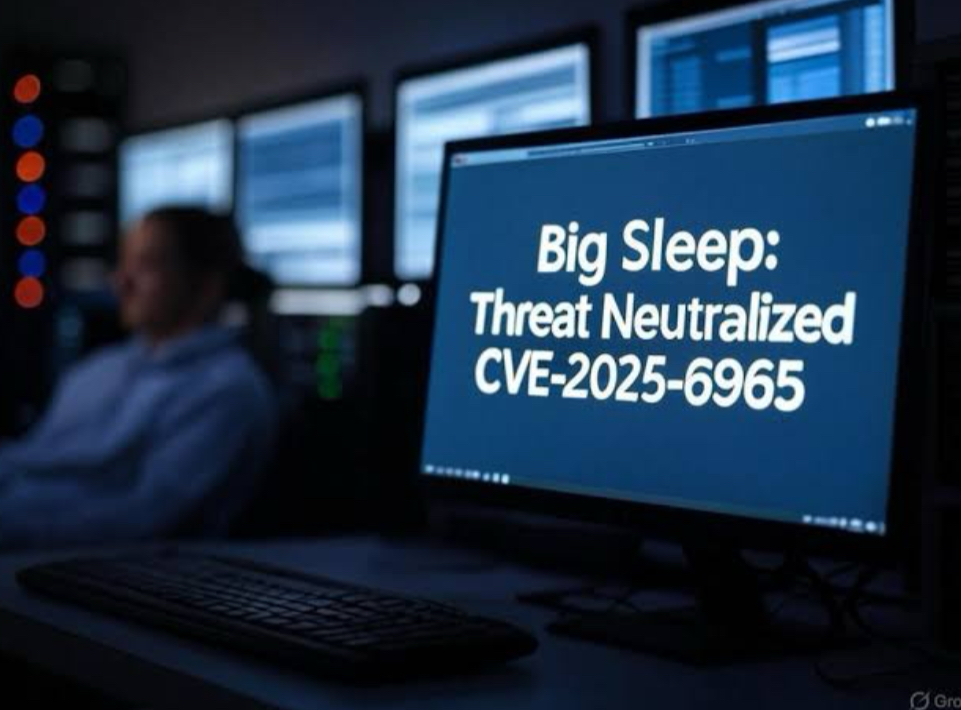
In what cybersecurity experts are calling a watershed moment for digital defense, Google has announced that its experimental artificial intelligence agent, codenamed “Big Sleep,” successfully identified and neutralized a sophisticated cyberattack in real time without any human intervention. This groundbreaking event marks the first documented case of an autonomous AI system independently intercepting and preventing a live cybersecurity threat, potentially redefining the future of online safety and cyberwarfare.
The incident, which occurred last week, involved an advanced zero-day exploit targeting a financial services cloud server in Southeast Asia. According to Google’s internal report, the exploit embedded deep within a file-sharing application was designed to evade standard detection tools by mimicking routine file behavior and encrypting its payload. However, Big Sleep flagged the anomaly almost instantly, isolated the threat, and deployed a containment protocol within milliseconds all before any damage was done or data exfiltration could occur.
“This wasn’t just anomaly detection,” said Dr. Eli Sunder, Head of Security Engineering at Google DeepMind. “Big Sleep recognized the behavior as malicious based on an evolving pattern of inference not preset rules or signatures. That kind of autonomous judgment is something we’ve only theorized until now.”
A Proactive Shield, Not a Passive Net
Speaking at Google’s annual security symposium in Zurich, CEO Sundar Pichai framed the breakthrough as the beginning of a new era in digital defense.
“For decades, cybersecurity has been fundamentally reactive—we patch after breaches, detect after entry, respond after damage,” Pichai said. “With Big Sleep, we’re seeing a paradigm shift. It’s not about reacting anymore. It’s about anticipating and acting in the moment, autonomously.”
Developed by a hybrid team from Google DeepMind, Chronicle Security, and Google Cloud AI, Big Sleep is not a traditional security tool. It’s an intelligent agent trained on billions of real and synthetic cyber threats using reinforcement learning, adversarial simulations, and neural architecture search. Unlike conventional firewalls or anti-malware programs, Big Sleep doesn’t rely on pre-written instructions; instead, it uses a combination of predictive behavior analysis and probabilistic reasoning to decide, in real time, how to respond to potential threats.
Its name Big Sleep” is inspired by a noir detective metaphor: a quiet enforcer who watches in silence and acts only when the moment demands.
Implications for Cybersecurity as We Know It
Security professionals have long dreamed of creating “always-on” systems that could not only detect attacks but neutralize them before they reach critical infrastructure. However, this dream has been hampered by the complexity of both cyber threats and real-world decision-making. Until now, even the most advanced intrusion detection systems required human analysts to interpret alerts and initiate responses often causing delays during which attackers can escalate access or exfiltrate data.
“Big Sleep changes the game,” said Prof. Miriam Kaneko, a cyber policy researcher at Stanford University. “If AI can operate as a sentient defense node thinking, reacting, and adapting faster than any human then we’ve entered a new frontier. But that also raises questions about oversight, transparency, and accountability.”
Indeed, critics have already begun raising flags. Some privacy advocates are concerned about giving an AI the power to autonomously make decisions that may affect users, infrastructure, or access to information especially if it operates on inference rather than explicit rules.
“If an AI agent wrongly classifies a legitimate action as hostile, who is held responsible? The engineer? The company? The code?” asked Kara Mboweni, Director at the Center for Digital Ethics in Cape Town. “And can a system like Big Sleep be manipulated by adversaries to make false positives part of their attack strategy?”
What Comes Next?
In response to these concerns, Google has announced plans to create a Global Advisory Board on Autonomous Cybersecurity, which will include ethicists, national security experts, software engineers, and civil rights groups. The board will be tasked with developing accountability frameworks, transparency protocols, and human override mechanisms to ensure AI agents remain aligned with international norms and values.
Meanwhile, Google has already begun testing Big Sleep in other high-risk sectors, including energy, aviation, and healthcare. Early reports suggest that the AI’s capabilities in threat prediction and real-time containment are consistent across different infrastructures a promising sign for potential large-scale deployment.
Rival tech firms including Microsoft and IBM have expressed interest in collaborative testing of similar AI systems, citing the need for interoperable defense networks in the face of increasingly transnational cyber threats. As these developments unfold, many believe we are witnessing the dawn of the autonomous cybersecurity age, where digital guardians operate silently in the background watching, learning, and acting in milliseconds to protect the connected world.