Influence, Intelligence & Integrity — The Real Marketing Trinity

The global marketing landscape is undergoing its most radical transformation yet and it’s no longer just about what brands say, but how, when, and why they say it. As top CMOs at Cannes declare AI the new frontier for personalization and performance, giants like Publicis are betting big on influencer marketing ecosystems that are fueled by data and driven by creators. But while innovation accelerates, regulation is right on its heels.
The third story is a stark reminder: without boundaries, brilliance can backfire. AI voice tools and chatbots may enhance reach, but under U.S. robocall laws, they also threaten legal peril and this is proof that emerging tech must now walk hand-in-hand with compliance and care.
Together, these headlines signal a powerful truth: the future of marketing lives at the crossroads of influence, intelligence, and integrity. In this era, scale is not enough. Success belongs to the brands that build trust before transactions, lead with transparency, and treat tech not just as a tool but as a responsibility.
Cannes CMOs Say AI Is Reshaping Customer Connections
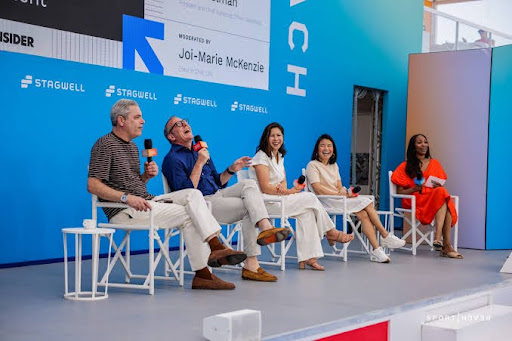
Global marketing leaders highlight AI’s growing role in personalization, trust-building, and scalable innovation.
At the 2025 Cannes Lions International Festival of Creativity, a clear narrative dominated the mainstage and closed-door sessions alike: artificial intelligence is fundamentally transforming the way brands connect with consumers. From luxury automobiles to beauty, banking, and tech, CMOs across industries are aligning on one thing AI isn’t just enhancing marketing, it’s redefining it.
Top marketing executives from Mercedes-Benz, e.l.f. Beauty, Citi, Salesforce, and several Fortune 500 companies spoke about AI as an urgent strategic priority not a distant investment. Discussions covered everything from real-time personalization and hyper-efficient content production pipelines to consumer behavior prediction and intelligent media buying.
“AI has shifted from being a tool to being a teammate,” one executive remarked during a private roundtable, reflecting the overall mood among attendees.
A major survey unveiled at the festival revealed that over 70% of global CMOs now plan to invest more than $10 million annually in AI-related tools and systems, with the biggest spenders focusing on platforms that integrate creative automation with deep consumer insights. The goal? To scale emotional intelligence across campaigns something traditionally considered “human-only” territory.
Blending Creativity with Precision
One of the biggest challenges discussed was how to balance AI’s analytical power with human creativity. Executives emphasized that while AI can streamline workflows and surface powerful insights, it is the human touch that makes marketing truly resonate. Brands like e.l.f. Beauty, which has leaned heavily into AI for trend forecasting and Gen Z engagement, showcased how human-guided AI content has significantly boosted ROI and loyalty.
At Mercedes-Benz, AI has been used not just for advertising personalization, but also in crafting digital showroom experiences tailored to individual preferences. This creates a consumer journey that feels both luxurious and intuitive, a key priority for high-end brands aiming to scale without sacrificing emotional depth.
Meanwhile, Salesforce continues to lead on the B2B front, using AI to help businesses map customer journeys with unmatched precision allowing for smarter decision-making, personalized messaging, and an entirely new level of customer service.
Trust and Authenticity in the Age of AI
Amid the excitement, CMOs acknowledged a critical tension: how to use AI without sacrificing brand authenticity. In an age of deepfakes, algorithmic bias, and data privacy concerns, building trust has become more complex but also more essential.
To address this, companies are building AI ethics frameworks, incorporating transparency in their messaging, and using AI not to replace human storytelling, but to enhance it. “Consumers don’t want perfect, they want real,” one CMO noted. “And AI can help us get there, faster and more efficiently, if we guide it with empathy.”
The Future Is Creative, Scalable, and Smart
From TikTok activations powered by AI to predictive ad placements and sentiment analysis, the integration of AI is already yielding results. But the CMOs at Cannes were clear: this is just the beginning.
As budgets grow and consumer expectations rise, the marketing organizations that win will be those that combine technical fluency with emotional depth. Whether through data-driven insights, real-time personalization, or the responsible use of generative AI, the path forward is one of intentional, human-first innovation.
Publicis Acquires Captiv8 in $150M Deal to Power Influencer Marketing Push
The French advertising giant strengthens its hold on the creator economy with strategic tech-driven expansion.
In a major move that signals its deepening commitment to the creator economy, Publicis Groupe has acquired Captiv8, a leading influencer marketing platform, in a deal valued at $150 million. The acquisition gives Publicis direct access to Captiv8’s expansive network of over 15 million creators, bolstered by robust AI-driven analytics, campaign tools, and real-time social insights.
This deal is more than just a business acquisition, it’s a strategic leap into performance-based influencer marketing, an area that has seen exponential growth over the last five years. By onboarding Captiv8’s advanced tools and data systems, Publicis now gains a significant edge in curating, managing, and scaling influencer-led campaigns for its global clients.
Strengthening a Fast-Growing Portfolio
The Captiv8 acquisition is the latest in a string of strategic investments by Publicis in the influencer marketing space. In recent years, the French ad conglomerate has also acquired firms like Influential and BR Media Group, signaling a clear pattern: Publicis wants a dominant stake in the rapidly growing U.S. influencer economy, which is projected to surpass $10 billion in 2025.
Publicis executives said the Captiv8 deal will allow their clients to leverage audience intelligence, brand affinity metrics, and ROI-focused campaign management delivering not just reach, but measurable resonance.
Why Captiv8?
Founded in 2015, Captiv8 built its reputation by combining influencer discovery with real-time performance tracking. Its platform allows brands to identify creators based on relevance, audience quality, and engagement authenticity, while using AI to predict campaign outcomes and optimize spend.
This fits squarely with Publicis’ ongoing shift toward data-driven creative marketing, especially as clients demand clearer return on investment and tighter alignment between influencer culture and brand voice.
Captiv8’s clients already include major players in fashion, beauty, tech, and retail, making it a natural addition to the Publicis global ecosystem, which includes agencies like Saatchi & Saatchi, Leo Burnett, and Publicis Media.
The Creator Economy Meets Corporate Scale
As the lines between entertainment, commerce, and communication continue to blur, brands are no longer satisfied with one-time influencer posts or vanity metrics. They want long-term creator partnerships, powered by real insights and scalable results. This acquisition gives Publicis a direct pathway to deliver on those expectations.
In addition, as Gen Z and millennial consumers shift their trust toward individuals over institutions, influencer marketing has become a cornerstone of modern brand strategy. Platforms like Captiv8 allow brands to not only find the right voices but also to ensure authentic alignment with their values, audiences, and goals.
Looking Ahead
With this acquisition, Publicis Groupe positions itself as a global powerhouse capable of delivering creative influence at scale anchored in data, guided by storytelling, and optimized for performance. As influencer marketing continues to mature from experimental campaigns to mainstream strategy, agencies with deep tech integrations will have a definitive advantage.
AI Marketing Faces Legal Backlash Under U.S. Robocall Laws

Legacy legislation puts modern outreach tools in regulatory crosshairs as companies scramble for compliance
As brands increasingly adopt AI-powered outreach tools including voice bots, SMS automations, and chat assistants. U.S. regulators are drawing sharp lines around what constitutes legal communication. Now, a 1991-era law, originally designed to curb nuisance robocalls, is threatening to redefine how AI can legally interact with consumers.
At the center of the debate is the Telephone Consumer Protection Act (TCPA), a federal law that prohibits certain types of unsolicited calls and texts. The law has gained renewed attention as AI-generated voices, automated dialing systems, and deepfake audio technologies become common in marketing and customer service. Under TCPA, companies can face fines of up to $1,500 per violation a significant risk when messages are sent at scale.
AI Meets a 30-Year-Old Law
Although the TCPA predates today’s digital environment, courts and the Federal Communications Commission (FCC) continue to interpret the law’s broad language in ways that now include AI-generated communication. Technologies like voice cloning, synthetic speech, and auto-dialing are increasingly categorized as “artificial voices” or “prerecorded messages,” especially when used for sales, debt collection, or promotional outreach.
Legal experts say that unless brands obtain prior express written consent from consumers, even the most sophisticated AI-generated interaction may violate federal law. This applies whether the message is sent by a robot, a cloned voice, or a smart assistant built into a CRM system.
In March 2024, the FCC issued a clarification that AI-generated voice calls qualify as prerecorded messages under the TCPA, making consent a mandatory prerequisite. Since then, legal action has surged.
Real-World Consequences
Several high-profile companies have already found themselves entangled in class action lawsuits over improper use of AI-powered marketing. In one case, a digital lender was fined millions after deploying an AI voice assistant to contact leads without proper consent. In another, a fitness app faced penalties after its automated SMS campaign failed to include adequate opt-out instructions.
As the technology scales, the margin for error is shrinking. Marketers and tech developers must now factor in not only user experience and performance but also federal compliance is a tricky balance when using AI systems that can learn, evolve, and respond dynamically.
Compliance is the New Strategy
To stay within legal limits, companies must ensure their AI outreach programs follow four key practices:
- Clear and documented consent before initiating contact.
- Human oversight in how AI systems are trained and deployed.
- Transparency in disclosures, such as identifying that a voice is synthetic or pre-recorded.
- Accessible opt-out mechanisms that allow users to reject further communication.
Many companies are now integrating TCPA compliance tools directly into their AI platforms, with some vendors offering real-time risk assessments, consent capture features, and automated do-not-call list checks.
The Cost of Non-Compliance
The financial risks of non-compliance are steep. With penalties ranging from $500 to $1,500 per violation, a single flawed AI-driven campaign could result in millions in liability especially if class-action status is granted.
As of mid-2025, dozens of new TCPA lawsuits are in progress, targeting companies across healthcare, e-commerce, real estate, and fintech.
In response, some marketing teams are scaling back on aggressive AI deployment, while others are pivoting toward first-party data strategies and consent-based marketing models to mitigate exposure.
A Future of Regulation and Redesign
The larger question now looms: Can a decades-old law keep up with a rapidly evolving AI ecosystem?
Industry analysts believe the legal landscape is heading toward a major reckoning. Several lobbying efforts are underway to update or reinterpret the TCPA for the AI era, pushing for clearer definitions and safer innovation zones. Until then, businesses must tread cautiously.