Agents, Algorithms, and Infrastructure — The New Startup Blueprint

As Lyzr AI, Cookd, and Zerohash announce their latest funding milestones, it’s clear we are witnessing more than just successful capital raises — we’re seeing the emergence of a new kind of startup era. One where intelligence, infrastructure, and integration are no longer supplementary but central to how companies build, grow, and define value.
Lyzr AI is rewriting the rules of leadership by allowing autonomous agents to take the front seat in decision-making, investor relations, and strategic execution. What was once imagined as a distant future — AI leading human-level negotiations — is now not only viable, but investable.
Meanwhile, Cookd is revolutionizing the way everyday consumers engage with food. In a country where culinary heritage runs deep, Cookd blends cultural relevance with commerce by transforming relatable recipe content into an accessible, purchase-ready experience. Its platform isn’t just offering convenience; it’s making tradition scalable.
And on the global fintech stage, Zerohash is building the unseen digital scaffolding that makes stablecoins viable for regulated finance. By powering enterprise adoption through compliant, API-first infrastructure, the startup is quietly facilitating the very foundations of tomorrow’s digital economy — from cross-border payments to tokenized settlement systems.
Each of these companies — though vastly different in mission and market — reflects the same underlying truth: the most promising startups today are no longer defined by disruption alone. They are defined by their ability to create seamless systems, scalable solutions, and sustainable engagement.
This is not just a moment of momentum for Lyzr, Cookd, or Zerohash. It’s a moment of maturity for the startup ecosystem itself — where ideas are sharpened by execution, and vision is validated by traction.
As these ventures transition into their next phases of growth, the emphasis is no longer on raising funds for the sake of survival. It’s on raising the bar for what technology can actually deliver. Intelligence is no longer a back-end feature. Culture is no longer separated from commerce. And infrastructure, once hidden in the background, is now front and center in the global innovation story.
Lyzr AI Makes History with $15M Agent-Led Funding Round, Reshaping Startup Fundraising Norms

In a bold move that could redefine the future of startup fundraising, Lyzr AI, a rapidly growing artificial intelligence startup, is preparing to close a $15 million investment round—marking the first-ever agent-led fundraising round in tech history. This pioneering approach places AI agents at the forefront of investor engagement, due diligence, and negotiations—breaking away from conventional founder- or VC-driven rounds.
The funding, expected to be finalized in the coming weeks, has already garnered attention from both institutional investors and tech visionaries, signaling a paradigm shift in how capital is raised in the age of intelligent automation.
What Sets This Round Apart?
Unlike traditional capital-raising campaigns where founders or financial advisors drive the process, Lyzr AI deployed its own advanced AI agents—developed in-house—to conduct outreach, facilitate investor discussions, analyze term sheets, and structure the round. This radical model not only accelerated the fundraising cycle but also demonstrated the operational maturity and real-world impact of the company’s own technology.
“This isn’t just about raising money—it’s about proving that autonomous agents can drive business-critical processes end-to-end,” said a spokesperson for Lyzr. “We’re living proof that AI can now act as more than just an assistant—it can be the lead.”
About Lyzr AI
Founded with the mission to democratize intelligent automation, Lyzr AI builds AI agents for developers and enterprises, focusing on boosting productivity across industries such as finance, healthcare, e-commerce, and logistics. The startup has been praised for its modular agent architecture and developer-first ecosystem, allowing companies to easily integrate and customize autonomous AI functions into their workflows.
Lyzr’s AI platform is already being adopted by early enterprise partners, where its agents assist in customer support, report generation, onboarding, and data analysis—cutting human workload by as much as 60% in pilot trials.
Investor Sentiment and Strategic Implications
Sources familiar with the round report that top-tier venture capital firms and AI-focused funds are backing the raise, along with strategic angels who see potential in Lyzr’s bold, agent-first business philosophy.
Analysts believe this move could spark a new wave of automation-led venture practices, with startups using their own tech to streamline operations, go-to-market strategies, and even financial negotiations. It also signals growing investor confidence in agentic AI models, which are gaining momentum as generative AI enters its next evolution.
Breaking the Barrier: A Step Toward the Future
Lyzr’s groundbreaking round challenges the conventional belief that fundraising must be manual, human-led, and founder-intensive. Instead, it opens the door to a future where autonomous agents can execute executive-level decisions with precision, speed, and efficiency.
“We believe this will inspire a new generation of founders to trust AI not just as a tool—but as a co-founder, a partner, and a negotiator,” said one early investor.
With its $15 million round nearly complete, Lyzr AI is poised not just to grow, but to lead the industry in defining what’s next for AI-native companies.
What’s Next for Lyzr AI?
The new capital will be used to scale product development, expand into global markets, and strengthen enterprise partnerships. Lyzr also plans to release a suite of new vertical-specific AI agents designed for industries such as legal tech, retail, and finance, further embedding AI autonomy into the business world.
As the company pushes boundaries, one thing is clear—Lyzr AI isn’t just building technology. It’s building the blueprint for the AI-first startup of the future.
Cookd Raises Pre-Series A Funding to Expand FoodTech Innovation, Backed by Spring Marketing Capital

Cookd, an emerging food-tech startup transforming how Indian households discover, prepare, and purchase meals, has successfully closed its Pre-Series A funding round, led by Spring Marketing Capital. The funding signals investor confidence in Cookd’s vision to bridge culinary content, community, and commerce on one unified platform.
While the total amount raised remains undisclosed, the startup plans to use the capital to accelerate product innovation, grow its content-driven commerce strategy, and deepen market penetration across key urban centers in India.
A Tastefully Crafted Startup Story
Founded by Ashwin Krishna and Venkatesh Krishnamoorthy, Cookd has quickly gained traction as a go-to platform for home cooks seeking accessible, authentic recipes and easy ingredient sourcing. The startup blends high-quality food content with shoppable convenience, offering step-by-step video recipes, curated meal kits, and direct ingredient delivery through its app.
Their mission is to make home cooking simpler, smarter, and more satisfying, particularly for India’s millennial and Gen Z audiences, who seek time-saving solutions without compromising on authenticity or flavor.
Why Spring Marketing Capital is Betting on Cookd
Spring Marketing Capital, known for backing brands that build deep consumer engagement, sees Cookd as more than a content platform it’s a full-fledged food ecosystem that taps into India’s massive culinary culture and purchasing power.
“In a country where food is not just a necessity but a cultural obsession, Cookd is reimagining the entire home cooking experience from discovery to delivery,” said a representative from Spring. “They have the right blend of content virality and commerce scalability.”
Cookd’s content already garners millions of monthly views across social platforms, with a loyal following that actively engages with recipe videos, cooking challenges, and behind-the-scenes culinary tips.
What Makes Cookd Stand Out
Unlike typical food startups that focus solely on delivery or content, Cookd is building a closed-loop ecosystem:
- Engaging Video Recipes: Tailored for quick, relatable learning
- Smart Ingredient Bundles: Shoppable kits aligned with trending recipes
- Creator Economy Integration: Collaborations with local chefs, food influencers, and communities
- Data-Driven Product Launches: Leveraging content insights to launch private-label food products and meal essentials
The startup is also exploring AI-driven recommendations, meal planning tools, and pantry inventory syncing for its next app upgrade.
Looking Ahead: Cookd’s Recipe for Growth
With Pre-Series A funding secured, Cookd plans to:
- Expand its content commerce model to new cities
- Launch region-specific recipe categories and ingredients
- Strengthen logistics and supply chain partnerships for faster delivery
- Roll out premium creator content and personalized subscription plans
The founders also hinted at scaling their branded kitchen products and deepening their partnerships with FMCG players and grocery brands, aiming to build a category-defining brand in the food-tech space.
Final Word
In a market saturated with food delivery apps and influencer recipes, Cookd has found a compelling middle ground—an all-in-one experience that educates, entertains, and enables. With Spring Marketing Capital backing their next phase, the startup is ready to take India’s kitchens by storm, one smart meal at a time.
Zerohash Raises $100 Million to Power the Future of Stablecoin Infrastructure, Eyes Unicorn Status
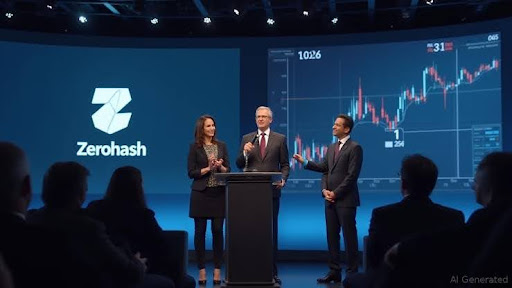
Zerohash, a key player in the digital asset infrastructure space, has successfully raised $100 million in a major funding round, bringing the company within striking distance of achieving unicorn valuation status. The raise underscores the growing global demand for enterprise-grade stablecoin rails and regulatory-compliant crypto infrastructure.
Backed by leading venture firms and strategic fintech investors, this funding round positions Zerohash as one of the few backend enablers at the forefront of stablecoin utility, payments, and custody, offering API-based infrastructure for a new generation of digital finance players.
Zerohash: The Infrastructure Behind the Crypto Curtain
While most consumers may never interact directly with Zerohash, the startup powers the crypto and stablecoin offerings behind banks, fintech apps, neobanks, brokerages, and enterprise payment platforms. Its plug-and-play APIs offer everything from:
- Stablecoin issuance and redemption
- Digital asset trading and liquidity
- Regulatory compliance and AML/KYC support
- Crypto tax reporting and custody infrastructure
Zerohash essentially enables any company to embed regulated crypto capabilities within their own apps—without having to build or license the tech from scratch.
Why This Raise Matters
The $100 million raise reflects soaring investor confidence in Zerohash’s critical infrastructure role—especially as stablecoins gain traction as a global payment medium, not just a speculative crypto asset.
“With clear demand from banks, cross-border fintech platforms, and traditional enterprises exploring digital dollars, Zerohash is building the rails they need,” noted one participating investor. “The market is finally catching up to the infrastructure.”
This round is also seen as a signal of institutional momentum behind crypto utility, rather than hype cycles, with regulated players like Zerohash playing a long-term role in bridging fiat and blockchain-based systems.
Global Tailwinds: Stablecoins Go Mainstream
Zerohash’s rise coincides with a global shift toward regulator-backed stablecoin integration, as central banks and private sector partners explore tokenized dollars, remittances, real-time settlement, and DeFi-on-compliance rails.
With stablecoin transaction volume surpassing $9 trillion globally in the last 12 months, the race is on for infrastructure providers that offer both scale and safety.
Zerohash’s regulatory-first approach gives it a competitive edge—having licenses in multiple U.S. states and across international jurisdictions, including Europe and Latin America.
Roadmap: What’s Next for Zerohash?
With its fresh capital, Zerohash aims to:
- Expand internationally, especially into Asia and Latin America
- Launch multi-chain support for non-Ethereum-based stablecoins
- Invest in real-time settlement and FX conversion tools
- Build out stablecoin-as-a-service products for governments and enterprises
- Strengthen compliance layers and fraud mitigation capabilities
Co-founders have also hinted at new partnerships with global payment processors and central banks exploring CBDCs, which would further cement Zerohash’s role as a foundational layer in the digital asset economy.
Final Take
In a crypto industry often dominated by speculation and flashy exchanges, Zerohash is quietly building the pipes that could define the future of programmable money. This $100 million round doesn’t just bring the company closer to unicorn status—it signals that stablecoins, infrastructure, and regulation-compliant innovation are finally converging at scale.
As governments, banks, and businesses step into the stablecoin era, Zerohash may become the invisible engine behind the digital dollars of tomorrow.