The Shape of What Comes Next

Innovation doesn’t always begin with fanfare. It often starts in quiet corners above the Sun’s hidden curve, in closed-door talks between nations, or along a track redesigned not just for speed, but for vision. This past week, through vastly different fields, we’ve witnessed the slow, deliberate shaping of what comes next.
From the European Space Agency’s Solar Orbiter came the first-ever images of the Sun’s south pole which is an achievement decades in the making. It wasn’t just a scientific milestone; it was a moment of humility, a reminder that even the closest star to Earth still holds secrets we are only now beginning to uncover. The Sun, constant in its presence, has never stopped evolving and neither have we. Quantum science quietly played its part here, powering the instruments that turned a dream into data, and anchoring the year’s global recognition of its expanding influence.
Far from the silence of space, another kind of tension played out on Earth. In offices across continents, the U.S., China, the EU, and the UK are negotiating whether to hold or let go of the tariff pause that’s kept certain economic doors open. These conversations don’t grab headlines like space discoveries or public spectacles, but their impact is just as far-reaching. They speak to how fragile and how powerful cooperation can be. Every term rewritten, every deal extended or denied, ripples through industries and households alike. Trade, after all, isn’t just about goods; it’s about trust, leverage, and the quiet hope that nations might choose shared progress over isolation.
And then, in the heart of Walt Disney World, a different kind of unveiling took place. The iconic Test Track ride at EPCOT is preparing to reopen with new life breathed into its design. For many, it’s just entertainment. But beneath the excitement is a story about reinvention, about honoring the past while accelerating toward the future. It’s a reminder that even joy and imagination require careful planning, creative risk, and the courage to rebuild.
In these three moments scientific, strategic, and imaginative there’s a common thread: movement. Not always loud. Not always immediate. But unmistakably forward.
So, no, progress doesn’t always come with fireworks. Sometimes it looks like a blurry image from the edge of the solar system. Sometimes it sounds like the quiet tap of a keyboard drafting a new policy. Sometimes it feels like wind in your face as redesigned thrill ride pulls you into tomorrow which fast, uncertain, but full of possibilities
Walt Disney World Announces Reopening Date for Reimagined Test Track Ride at EPCOT
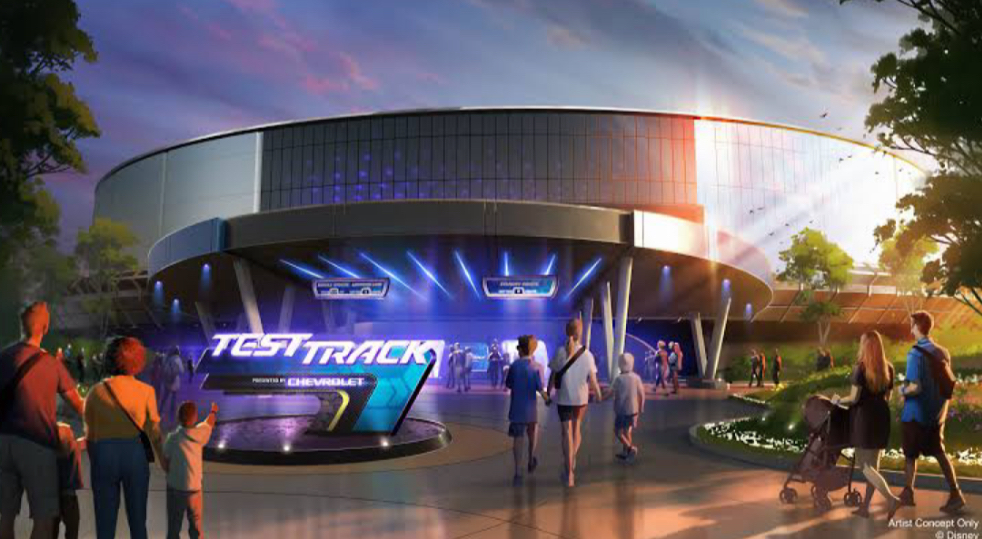
Disney fans have something new to look forward to at EPCOT, as Walt Disney World has officially announced the reopening date for the highly anticipated reimagining of the iconic Test Track attraction. The beloved high-speed ride, known for blending futuristic vehicle design with thrilling twists and turns, is set to welcome guests once again on [insert official date when available], following months of extensive refurbishment and creative updates.
Originally opened in 1999 and reimagined once before in 2012, Test Track has long been a cornerstone of EPCOT’s World Discovery neighborhood, offering guests a chance to virtually design a car and then test it out on a thrilling outdoor track. The upcoming version, described by Disney as a “next evolution” of the experience, is being developed in collaboration with Chevrolet, a long-time partner on the attraction.
According to Disney Imagineers, the new iteration of Test Track will draw inspiration from the original World of Motion attraction that occupied the same space before Test Track debuted. While few technical details have been revealed, the reimagining promises to combine nostalgic storytelling with cutting-edge technology, creating a ride that honors EPCOT’s legacy while pushing the boundaries of innovation.
“EPCOT has always stood as a symbol of possibility and progress,” said a Disney spokesperson. “The new Test Track will continue that tradition by bringing guests into the design process in ways they’ve never experienced before.”
The refurbishment comes as part of Disney’s broader effort to transform EPCOT into a park that seamlessly blends celebration, innovation, and imagination. Along with the Test Track reboot, recent updates have included the opening of Guardians of the Galaxy: Cosmic Rewind, the Journey of Water Inspired by Moana walkthrough, and continued progress on the park’s central hub redesign.
As excitement builds for the reopening, theme park enthusiasts are speculating on what the new ride experience will entail, especially with references to “the spirit of optimism” and a renewed focus on mobility and creativity.
Until then, fans can expect a blend of nostalgia, speed, and storytelling all trademark elements of Disney magic when the revamped Test Track makes its grand return later this year.
Stay tuned to Disney’s official channels and park updates for more details, concept art, and behind-the-scenes looks in the weeks leading up to the reopening.
Tariff Truce Countdown: U.S. Races Against July Deadline to Extend Global Trade Pause
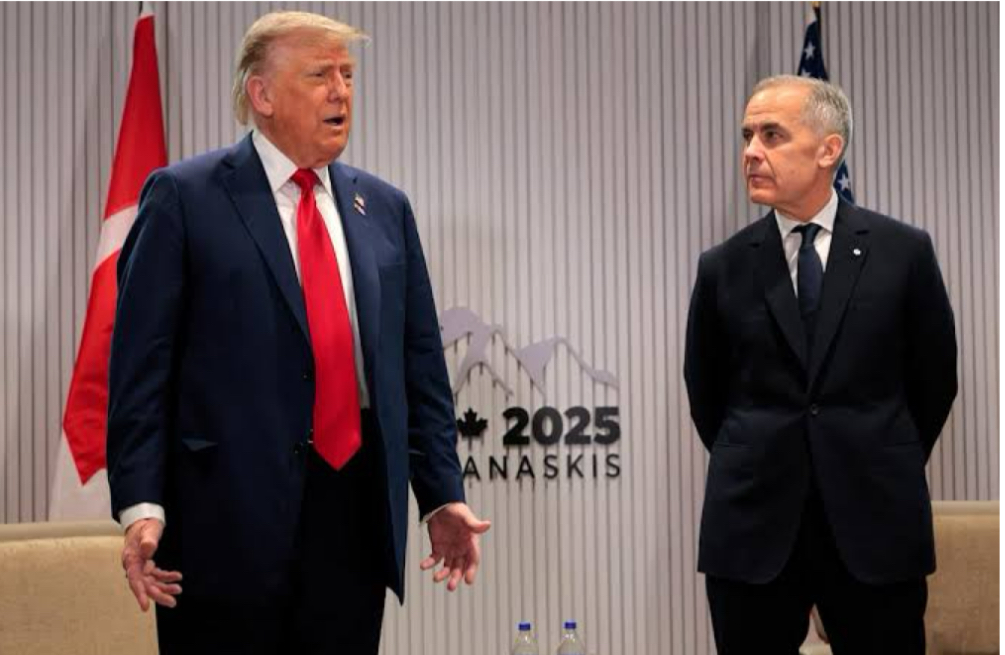
With less than three weeks remaining until a crucial July deadline, the United States is intensifying negotiations with China, the European Union, and the United Kingdom to extend a key tariff suspension that has helped stabilize international trade flows in recent years. The outcome of these high-stakes talks could reshape the global economic landscape, influencing market access, supply chains, and diplomatic relations for years to come.
The existing agreements, informally dubbed the “tariff truce,” were enacted in phases beginning in 2020 as temporary reprieves from the escalating trade tensions that had defined much of the previous decade. These pauses halted billions of dollars in retaliatory tariffs on goods ranging from automobiles and electronics to steel, aluminum, and agricultural products.
Now, as the expiration date approaches, negotiators are working against the clock to forge a renewed pact that reflects the shifting priorities of the Biden administration, rising economic concerns in Europe and China, and the evolving dynamics of post-pandemic globalization.
According to officials familiar with the negotiations, discussions are centered on reducing or permanently eliminating certain tariff lines, revising quotas, and addressing contentious issues like state subsidies, technology transfer, and climate-related trade standards. The talks are being described as “technically intense,” with each party bringing a distinct set of demands to the table.
For the United States, extending the tariff pause aligns with efforts to combat inflation and protect domestic industries that rely on imported components. At the same time, the Biden administration is facing pressure to adopt a tougher stance on trade imbalances, intellectual property protections, and human rights concerns, especially in dealings with Beijing.
The European Union, meanwhile, is keen on avoiding a return to tit-for-tat measures that strained transatlantic ties during the Trump era. European leaders have also emphasized the need for green trade policies, calling for incentives and exemptions for low-emission technologies and climate-friendly industries.
The UK, which is navigating its own post-Brexit trade identity, is seeking clarity and consistency in its trade terms with Washington, hoping to solidify its position as a key economic partner in the Atlantic alliance.
Financial markets and multinational corporations are watching the negotiations closely. A breakdown in talks could result in a resurgence of tariffs, potentially disrupting supply chains and prompting price increases across consumer goods, energy, and manufacturing sectors. Conversely, a successful extension or even a permanent trade framework could provide much-needed stability to investors and businesses still recovering from the volatility of recent years.
“Trade peace is always more fragile than trade war,” said one international trade analyst. “This is not just about tariffs; it’s about how nations choose to coexist in a deeply interconnected economy.”
The timing of the negotiations adds another layer of urgency. With U.S. elections looming in 2026 and economic anxiety rising amid interest rate debates and slow wage growth, the Biden administration is eager to deliver a win that balances domestic political optics with international diplomacy.
Meanwhile, both the EU and UK are navigating their own economic headwinds, including energy transitions, rising debt levels, and growing public scrutiny of globalization’s uneven effects.
As the July deadline approaches, all eyes will be on whether the parties can strike a new deal or whether the fragile truce will give way to renewed confrontation. Negotiators have indicated cautious optimism, but warn that even small disagreements could derail the talks in the final days.
An official statement from the U.S. Trade Representative is expected in the coming weeks, potentially outlining next steps, interim measures, or a framework for future negotiations.
For now, the global economy waits holding its breath as the clock ticks down on one of the most consequential trade decisions of the year.
Quantum Science Spotlight: ESA Captures First-Ever Images of the Sun’s South Pole in Landmark Moment for the International Year of Quantum Science and Technology
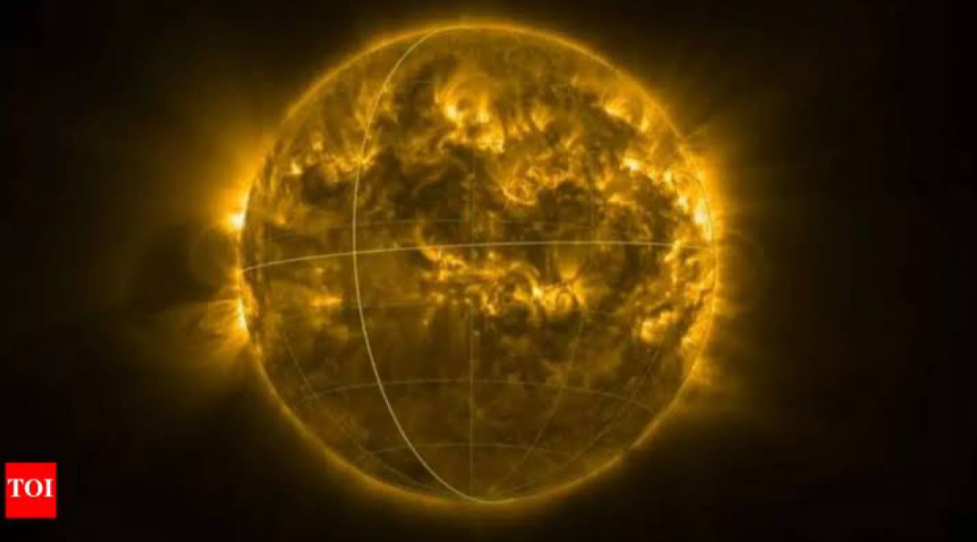
In a groundbreaking achievement that bridges the frontiers of space exploration and quantum science, the European Space Agency (ESA) has released the first-ever images of the Sun’s elusive south pole, captured by its flagship Solar Orbiter mission. The milestone, announced on June 11, marks a pivotal moment not only for solar physics but also within the broader context of the United Nations’ 2025 International Year of Quantum Science and Technology a global initiative celebrating the impact of quantum discoveries on modern science, communication, and space research.
The high-resolution imagery, taken from a unique orbital angle made possible by a gravity-assist maneuver, offers humanity an unprecedented view of a region of the Sun that has remained largely hidden and poorly understood since the dawn of heliophysics. Scientists say the data will significantly improve models of solar magnetic activity and deepen understanding of how the Sun’s polar regions influence solar winds, space weather, and Earth’s electromagnetic environment.
“This is a defining moment for solar science,” said Dr. Claire Rousseau, lead solar physicist at ESA. “For the first time, we are able to study the southern pole of our star with clarity and precision. This will reshape our understanding of solar dynamics and their far-reaching effects on planetary systems including our own.”
Launched in 2020, the Solar Orbiter is a collaborative mission between the European Space Agency and NASA, designed to study the Sun’s atmosphere, magnetic fields, and polar regions using a suite of ten advanced instruments. Until now, imaging the Sun’s poles has been one of the most difficult challenges in solar research due to the limitations of Earth-based and low-ecliptic space observation.
But with a carefully choreographed trajectory and years of gravitational slingshots around Venus and Earth, the spacecraft achieved an unprecedented orbital inclination earlier this year, finally positioning its cameras for a direct view of the solar south pole.
The result is a series of ultra-detailed images showing complex magnetic structures, dynamic plasma flows, and coronal phenomena unique to the solar pole features scientists believe may hold answers to longstanding questions about the Sun’s 11-year cycle, magnetic reversals, and the origin of solar storms.
While the Solar Orbiter is not a quantum mission per se, its achievements resonate powerfully within the International Year of Quantum Science and Technology, an initiative led by UNESCO and supported by over 80 countries. The year-long celebration aims to raise global awareness of quantum theory’s influence on modern innovation from cryptography and computing to materials science and, increasingly, space exploration.
“This discovery is a beautiful intersection of two revolutionary frontiers solar physics and quantum technology,” said Professor Adewale Eniola, a UNESCO ambassador for quantum outreach. “The data gathered from Solar Orbiter will feed into quantum-enhanced models that simulate solar plasma behaviors and predict space weather with increasing accuracy. It’s a perfect example of quantum science enabling deeper understanding of the cosmos.”
ESA officials echoed that sentiment, noting that some of the spacecraft’s onboard instruments rely on quantum-based technologies, such as highly sensitive magnetometers and particle detectors that operate with quantum precision.
Understanding the behavior of the Sun’s poles is critical not only for scientific curiosity but also for practical reasons. Solar flares and coronal mass ejections eruptions driven by the Sun’s magnetic fields can severely disrupt satellites, GPS systems, power grids, and communication networks on Earth. With accurate pole-based data, scientists may soon be able to better predict when and how these events will occur, giving industries and governments more time to prepare.
Moreover, insights from the south pole could inform future crewed space missions, especially as interest grows in returning to the Moon and launching long-duration missions to Mars. The Sun’s polar activity plays a key role in shaping cosmic radiation levels across the solar system, a factor that can significantly impact astronaut safety.
ESA has confirmed that the Solar Orbiter will continue to climb to higher orbital inclinations in the years ahead, eventually capturing images of both poles and providing continuous measurements of solar activity. These datasets will be made available to the global scientific community and are expected to fuel new discoveries across disciplines.
In the meantime, the release of these polar images will be showcased in a series of global exhibitions and educational programs tied to the International Year of Quantum Science and Technology, including museum installations, virtual classrooms, and quantum-tech forums.
“The Sun is our closest star, and yet it still holds so many mysteries,” said Dr. Rousseau. “But thanks to this mission and the power of quantum science to interpret the cosmos we’re finally beginning to illuminate even its darkest corners.”