The Future Is Under Construction — And Under Question

Today’s news cycle paints a vivid picture of a world building toward the future—faster, smarter, higher. But beneath the buzz of funding rounds and AI breakthroughs lies a deeper story: innovation is never neutral. It is shaped by who is included, who is funded, and who is left behind.
In medicine, BloodGPT offers a powerful glimpse of what healthcare could become—rapid, accessible, and intelligent. Yet for all its potential, it raises questions that technology alone cannot answer: Will AI deepen or reduce health disparities? Will the rush for speed overshadow the need for patient trust and doctor oversight?
In policy and culture, Australia’s DEI pullback reminds us that progress isn’t always forward. The retreat from inclusive startup support isn’t just a budget shift—it’s a signal that equity can be deprioritized when the politics shift. What happens when the startup ecosystem favors sameness over diversity? What innovations are we losing by ignoring underrepresented voices?
In space, France’s Look Up is a beacon of bold ambition. With radar networks and orbital AI, Europe is charting its own course in the race for satellite safety and strategic autonomy. Yet even this futuristic leap underscores a truth as old as innovation itself—nations and corporations alike must now balance competition with cooperation in the final frontier.
Together, these three stories form a shared narrative: the future is under construction—but its foundation is being contested.
Will health tech center humanity?
Will inclusion be a core value or a passing trend?
Will space remain a shared domain—or a battleground for sovereignty?
At Blacksolvent, we’ll keep tracking the tensions, the triumphs, and the turning points—because the edge of tomorrow isn’t just about what we build, but who we build it for.
Revolutionizing Diagnostics: BloodGPT’s AI Breakthrough Offers Rapid Blood Analysis in Minutes

In a groundbreaking stride for healthcare and diagnostics, a new AI startup named BloodGPT is poised to transform the way medical professionals interpret blood work. The company has developed a proprietary artificial intelligence system capable of analyzing a person’s blood sample in just minutes—a development that could reshape clinical decision-making and early disease detection around the world.
A Game-Changer in Medical Diagnostics
Traditionally, blood test results can take hours to days to be processed, interpreted, and communicated back to the patient. BloodGPT aims to eliminate that lag. Leveraging advanced machine learning algorithms trained on vast datasets of medical records and blood test results, the system can read and interpret key biomarkers almost instantly. This includes indicators related to infections, chronic diseases, organ function, nutritional deficiencies, and even early signs of cancer.
Dr. Adanna Brooks, a physician and advisor for BloodGPT, calls it “the most promising leap in patient diagnostics since portable ultrasound,” noting that such rapid insights can accelerate life-saving decisions in critical settings like emergency rooms and intensive care units.
How It Works
BloodGPT integrates AI with microfluidic testing devices—a compact, portable solution that requires only a few drops of blood. Once the sample is introduced, the AI immediately begins processing the data through its trained neural networks. Within three to five minutes, physicians receive a full diagnostic report, including risk levels, flagged anomalies, and potential follow-up recommendations.
What sets BloodGPT apart is not just speed, but accuracy. The AI has been benchmarked against standard laboratory tests and has shown diagnostic alignment rates exceeding 94%, according to early clinical trials.
Real-World Applications
The implications are far-reaching. For rural clinics and mobile health units with limited lab infrastructure, BloodGPT can bring high-level diagnostics to the frontline. For telemedicine providers, it could be integrated with at-home testing kits, enabling remote patients to send in samples and get instant results during virtual consultations.
Hospitals are already expressing interest. BloodGPT recently signed pilot partnerships with three regional healthcare systems in the U.S. and one in sub-Saharan Africa. In these pilot programs, the AI will be used to triage patients, monitor chronic illness, and support early disease detection.
AI and Ethical Oversight
As with all AI in healthcare, ethical oversight remains crucial. BloodGPT has partnered with bioethicists, medical regulators, and privacy experts to ensure compliance with HIPAA, GDPR, and other regional data protection laws. The AI does not store personal patient data locally and encrypts all communication end-to-end.
“We’re not replacing doctors,” says BloodGPT co-founder and CEO Malik Forrester. “We’re equipping them with the fastest, most intelligent diagnostic support system the industry has ever seen.”
Investor Attention and the Road Ahead
Since its debut at the SXSW Health Innovation showcase earlier this year, BloodGPT has attracted substantial venture capital interest. The company recently closed a $28 million Series A funding round led by Sequoia Capital and SoftTech Ventures, which will fuel further research, FDA approval efforts, and global deployment strategies.
BloodGPT’s leadership says the next major milestone is scaling the product for commercial use in hospitals by Q1 2026, with plans to expand to pharmacies and at-home diagnostic devices by the end of that year.
Conclusion
As artificial intelligence continues to make waves in healthcare, BloodGPT stands out for its practical, immediate impact on one of the most fundamental tools in medicine—blood testing. By drastically reducing the time between sample and diagnosis, it opens the door to faster treatments, better patient outcomes, and a smarter, more connected healthcare system.
Australian DEI Retrenchment Begins to Undercut Startup Funding Nationwide
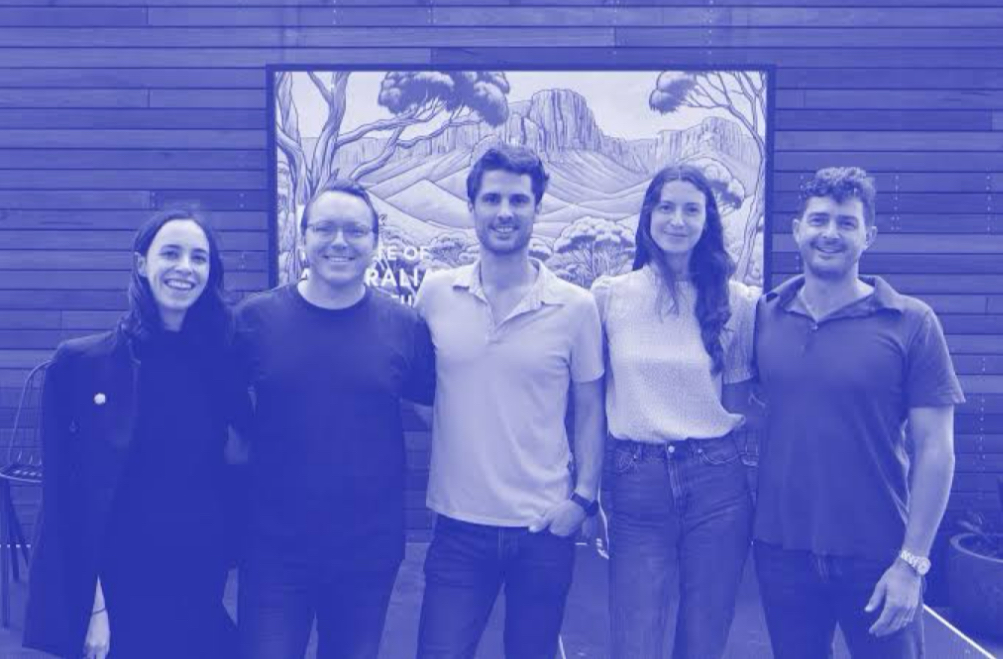
A growing backlash against Diversity, Equity, and Inclusion (DEI) initiatives in Australia is beginning to choke off vital funding streams for underrepresented startup founders, sparking concerns across the country’s innovation sector. From federal programs to venture capital pipelines, the retreat from DEI is being felt most acutely by women, First Nations founders, and culturally diverse entrepreneurs.
Equity Cuts Are Leaving Gaps in the Startup Ecosystem
Recent investment trends show a stark gender disparity in Australia’s tech and startup funding. In 2023, all-female founder teams received just 4%—approximately A$140 million—of the A$3.5 billion in total venture funding. In contrast, male-only teams secured a dominant 82% of the capital, according to data published by Cut Through Venture and Folklore.
Women-led startups in university incubators haven’t fared better: over the past decade, they’ve received just 3.9% of venture capital raised, despite growing participation at the student level. These figures point to a persistent structural imbalance—now worsened by policy pullbacks.
Government Programs Walk Back DEI Commitments
One of the most visible signs of the retreat came with the early closure of the Boosting Female Founders Initiative, a federal government program originally launched to support women-led tech businesses with over A$50 million in funding. Without explanation, the government halted the program before the final funding round, leaving A$17 million unallocated.
“This isn’t just a missed opportunity—it’s a slap in the face,” said Emily Huynh, co-founder of a Sydney-based femtech startup. “Women founders are already underfunded. Cutting one of the few targeted programs we had sends a clear message.”
Corporate Australia Follows Suit
Following trends in the U.S., where several major tech companies have de-emphasized or dissolved DEI departments, Australian corporations are also quietly scaling back DEI initiatives. Language has shifted from bold equity commitments to softer “inclusion” messaging. Several organizations are rolling DEI responsibilities into general HR roles, diluting the strategic focus on marginalized groups.
“DEI is increasingly being framed as political baggage,” says Angelica Hunt, director at equity consultancy TDC Global. “What we’re seeing is a rebranding to avoid backlash, not a commitment to actual inclusion or measurable impact.”
A Cultural and Economic Setback
Advocates warn that this shift may cost Australia its edge in innovation. Diverse founding teams have been shown globally to outperform homogeneous ones in terms of creativity, revenue, and resilience. By scaling back DEI-driven funding and policies, the country may be limiting its own economic potential.
“Without structural investment in diverse talent, we’ll keep seeing the same cycle: the same types of founders building for the same markets,” said Malakai Ford, founder of the Indigenous-focused incubator First Seed Labs. “We’re not just losing out on fairness—we’re losing out on better solutions.”
What Happens Next?
While the federal government has yet to announce a successor to the Boosting Female Founders initiative, growing pressure from advocacy groups, investors, and startup hubs may force a policy recalibration. Many are calling for:
- Revival of equity-focused grant programs
- Transparent DEI benchmarks for investors and accelerators
- Funding pipelines for First Nations, women, and migrant founders
- Public accountability metrics in startup funding reports
A few VCs, such as Blackbird Ventures, have publicly recommitted to diverse pitch targets—aiming for at least 40% of their pitch pipeline to come from women-led startups—but admit that more systemic change is needed across the board.
Conclusion
Australia’s DEI retrenchment is no longer theoretical—it’s being measured in lost opportunities, shuttered programs, and dwindling access to capital. For a startup economy that claims to value innovation and inclusivity, the current course may be cutting off some of its most promising pathways.
As policy reversals and cultural backlash mount, founders from underrepresented backgrounds are once again left to fight for space in an increasingly narrow venture landscape.
France’s Look Up Secures €50M to Launch Europe’s Orbital Safety Revolution

Toulouse-based space technology startup Look Up has raised €50 million in combined equity, debt, and public financing, positioning itself as a key European player in the emerging space traffic management and orbital defense sector.
This landmark funding round is one of the largest Series A raises in Europe’s space industry this year, highlighting growing global concern around satellite collisions, debris tracking, and space security.
What Look Up Does
Founded in 2022 by former French Space Force general Michel Friedling and ex-CNES expert Juan Carlos Dolado, Look Up is building a next-generation solution for space domain awareness (SDA) — an essential system to monitor, track, and manage satellite movements and orbital debris.
Its technology stack includes:
- SYNAPSE: A real-time AI-driven data fusion platform that analyzes space object trajectories.
- SORASYS: A proprietary radar network capable of tracking objects in Low Earth Orbit (LEO).
- Space-Operations-as-a-Service: A full-service offering that combines hardware, software, and analytics for collision avoidance and satellite maneuvering.
Funding Breakdown
The €50 million round is a blend of private investment, public support, and bank financing:
- Private equity from top European investors including ETF Partners (UK), MIG Capital (Germany), Karista, and Expansion Ventures (France).
- Kfund, a leading Spanish tech investor, joined through its Leadwind fund, which is backed by Telefónica.
- €15 million in non-dilutive public funding from the European Innovation Council (EIC), aimed at expanding radar infrastructure across French territories in the Pacific.
A Strategic European Asset
The funding will support the development and deployment of two ground-based radar units in French Polynesia, where Look Up aims to monitor under-observed orbital regions. It will also fund the creation of a new Space Operations Centre, the heart of its monitoring network.
With global concern rising over the safety of Earth’s increasingly congested orbits, Look Up’s vision aligns with Europe’s goal to reduce reliance on U.S. or commercial providers for orbital intelligence.
What’s Next
With its fresh capital injection, Look Up plans to:
- Deploy radar systems in the South Pacific.
- Launch its Toulouse-based SpaceOps HQ.
- Execute its first orbital demonstration for collision detection and avoidance.
- Expand its radar network across Europe and potentially into Africa and Asia.
Why It Matters
As more nations and private companies race to occupy low Earth orbit, the risks of satellite collisions and debris-triggered chain reactions are mounting. Without robust monitoring, these risks could severely disrupt communications, defense, and navigation systems worldwide.
Look Up’s platform offers not only a European solution but also a scalable commercial service model that could be exported globally.
Conclusion
Look Up’s €50 million raise signals Europe’s determination to establish sovereignty in the orbital security domain. In a world where space is becoming the next strategic frontier, this French startup is building the radar grid and AI muscle that may keep our skies—and satellites—safe.
Stay with Blacksolvent for breaking space, policy, and frontier tech updates.