Funding the Future with Intention
n a world where capital often chases speed, today’s most compelling stories are defined not by urgency but by intentionality. From the innovation labs of Seoul to the fintech corridors of Dubai and the venture capitals of Berlin, there’s a quiet revolution happening: a shift from reactive investing to visionary building. And at the heart of that shift are three standout stories Hyundai, Picus, and Gainz each echoing a deeper message about where the future is headed and who is choosing to shape it.
Hyundai Motor Group’s launch of ZER01NE Fund III is more than a show of financial muscle it’s a strategic blueprint for the future of mobility, energy, and technology. It demonstrates that legacy giants can evolve into innovation orchestrators, not by accident, but by design. With its deep-tech focus and global scouting ambitions, the fund exemplifies a maturing ecosystem where industrial strength and startup agility don’t collide they collaborate.
Picus Capital’s €250M Fund II, meanwhile, is a signal fire in the fog of a global VC cooldown. In an environment where many firms are retreating or consolidating, Picus is doubling down not on hype cycles, but on principled, long-term backing of founders who build patiently, ethically, and globally. Its approach to investing across life stages, from pre-seed to Series C, reveals a belief in not just innovation, but in the people who carry it through hard seasons.
And then there’s Gainz young, ambitious, and deeply grounded in impact. Its Shariah-compliant SME lending platform isn’t just a fintech solution; it’s an answer to a decades-long inequity in regional financing. In a landscape where small businesses have historically been underserved, Gainz offers not just access to capital, but access to dignity allowing local entrepreneurs to scale, thrive, and contribute meaningfully to their economies.
Together, these stories weave a narrative that transcends verticals or valuations. They speak to a future being funded not by chance, but by choice. A future built on thoughtful capital, inclusive design, and a willingness to invest not just in products, but in the ecosystems, founders, and communities behind them.
Hyundai Motor Group Launches $93M ZER01NE Fund III, Cementing Its Role as a Global Innovation Catalyst
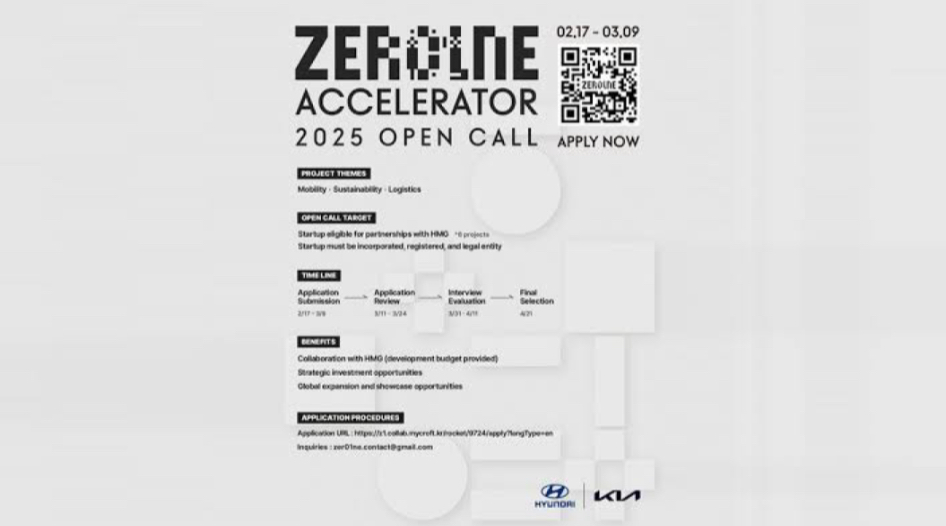
In a powerful new chapter of its transformation from industrial giant to global innovation architect, Hyundai Motor Group has launched ZER01NE Fund III, a KRW 125 billion (~$93 million) venture capital initiative that places deep-tech and sustainability at the heart of its future vision. This bold move not only reflects Hyundai’s unwavering confidence in early-stage innovation but signals a new era where automakers don’t just manufacture mobility they co-create the technological backbone of the 21st century.
A Fund With Purpose, Not Just Capital
This latest fund is the third in the ZER01NE series and marks a 1.5x increase from Fund II, signaling Hyundai’s growing appetite for innovation beyond automotive assembly lines. While the fund will target high-potential startups working on AI, robotics, cybersecurity, smart manufacturing, hydrogen, and sustainable energy, it’s not just about return on investment. ZER01NE Fund III is a strategic mission to integrate startup-led breakthroughs directly into Hyundai’s operational, mobility, and clean energy ecosystems.
From Lab to Launchpad
Since the first ZER01NE platform launched in 2018, Hyundai has invested in more than 105 startups, resulting in over 200 collaborations across its companies including Hyundai Motor, Kia Corporation, and Hyundai Motor Securities. The new fund sees participation from ten affiliates, such as Hyundai Mobis, Hyundai Rotem, Hyundai Wia, and Hyundai Kefico.
But this is no longer about legacy companies flirting with startup culture. ZER01NE Fund III is about scale. It formalizes a blueprint where Hyundai becomes a launchpad for global startups with game-changing ideas.
A Broader Global Play
The fund will focus heavily on global scouting, drawing founders not only from South Korea but from Europe, the U.S., and Southeast Asia. It’s Hyundai’s answer to the growing decentralization of deep tech where innovation is just as likely to emerge from a Nairobi lab or a Tel Aviv accelerator as it is from Silicon Valley.
Hyundai’s message is clear: whether it’s robotics, clean hydrogen, smart mobility, or automated logistics, it wants to back ideas that can scale, integrate, and transform.
Redefining the Role of Corporate Venture Capital
What sets Hyundai’s ZER01NE Fund III apart from many traditional CVCs (corporate venture capital arms) is its intentionality. Unlike passive investments aimed at balance sheet diversification, Hyundai is building an innovation pipeline where portfolio companies are not just funded but embedded into the group’s operational fabric. From co-developing next-gen EV battery tech to integrating AI into assembly lines, the fund is structured to translate funding into functionality.
This hands-on, partnership-driven model places Hyundai in the same league as other innovation-forward industrial giants like Bosch, Siemens, and Hitachi companies that have reoriented themselves as platforms for technological acceleration rather than just product manufacturers.
The Bigger Picture: Mobility Meets Planet
Hyundai’s investment focus on hydrogen and sustainable energy also signals its alignment with net-zero agendas. In 2021, the group pledged carbon neutrality across its value chain by 2045. ZER01NE Fund III reinforces that promise by ensuring the technologies needed for that transition are not only discovered but nurtured, scaled, and implemented from the inside out.
From building smart mobility hubs in urban areas to investing in circular manufacturing processes, this fund will likely play a key role in driving Hyundai’s long-term ESG strategy. And for early-stage founders looking to build for planet-scale impact, Hyundai is positioning itself as a rare partner with both the capital and the credibility to deliver on such ambition.
Picus Capital Closes €250M Fund II, Doubling Down on Early-Stage Innovation Amid VC Slowdown

In a bold move that defies current market trends, Munich-based venture capital firm Picus Capital has announced the final close of its €250 million Picus Venture Fund II, reaching its hard cap in an oversubscribed round. This milestone underscores Picus Capital’s unwavering commitment to early-stage innovation, even as the broader venture capital landscape experiences a downturn.
A Strategic Double-Down Approach
Picus Venture Fund II is designed to predominantly back the firm’s most promising early-stage portfolio companies, leveraging deep access, proprietary information, and insight advantages. This “double-down” strategy allows Picus to provide continued support to startups that have demonstrated significant potential, ensuring they have the resources needed to scale effectively. Additionally, the fund reserves capital for new investments in emerging sectors, including generative AI, cybersecurity, and climate tech, areas where Picus sees significant growth potential.
Rapid Fundraising Amid Market Challenges
The fundraising process for Picus Venture Fund II began in early 2024, with the first close at €140 million. Remarkably, the fund reached its €250 million hard cap in less than 12 months a rare feat in today’s market, where many venture capital firms face prolonged fundraising cycles. This swift closure reflects strong investor confidence in Picus Capital’s investment philosophy and track record.
Global Reach and Long-Term Partnerships
Headquartered in Munich, Picus Capital operates across New York, London, Berlin, Madrid, and Bangalore, with recent expansions into Singapore, Paris, and Mexico City. This global presence enables the firm to support high-potential founders worldwide. Picus is known for partnering with startups from the pre-seed stage through to later growth, often writing the first check for ventures with disruptive visions.
The firm’s long-term investment philosophy has already borne fruit, with early backing in now-iconic ventures such as Personio (last valued at $8.5B) and Enpal (€2.2B), generating an annual IRR above 45% since inception. Other notable exits include early investments in Taxfix and Forto, both of which have become category leaders in their respective fields.
Commitment to Sustainable Innovation
Picus Capital’s investment strategy emphasizes support for purpose-led technology companies with a strong focus on sustainability. The firm’s collaboration with investors such as M&G’s Catalyst fund underscores its dedication to backing companies that address significant environmental and social challenges.
Looking Ahead
With the successful close of Picus Venture Fund II, Picus Capital is well-positioned to continue its mission of being a long-term sparring partner to the world’s most ambitious entrepreneurs. The firm remains committed to supporting companies throughout their growth journey, from inception to IPO and beyond, particularly in sectors such as AI, climate tech, fintech, and healthcare.
Gainz Secures Seven-Figure Pre-Seed Funding to Transform SME Financing in the MENA Region
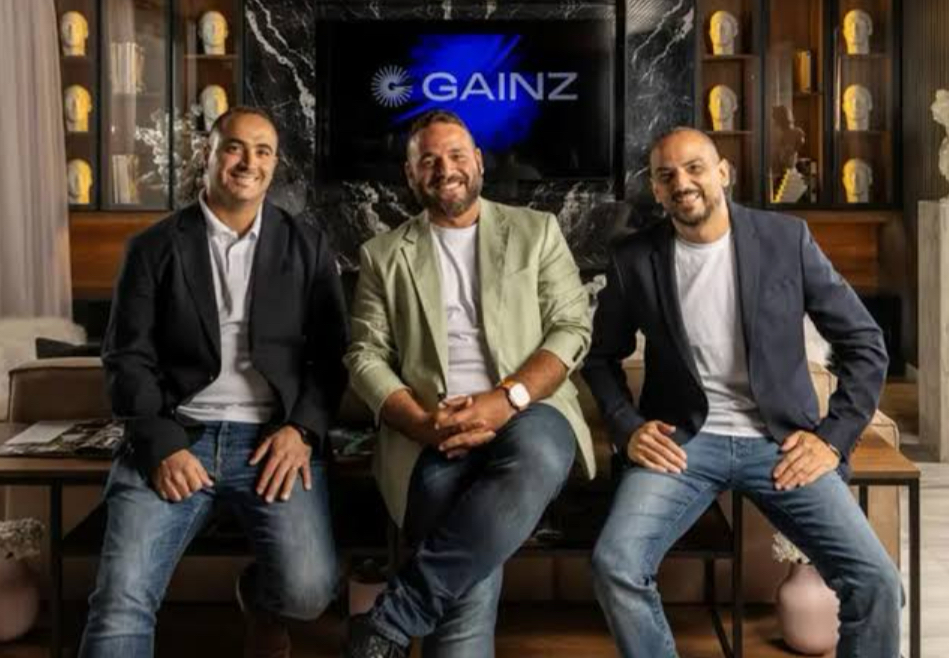
In a significant move to address the substantial financing gap faced by small and medium-sized enterprises (SMEs) in the Middle East and North Africa (MENA) region, UAE-based fintech startup Gainz has successfully closed a seven-figure pre-seed funding round. The round, a combination of equity and debt financing, was led by Antler MENAP, with participation from Lithium Holdings, Eleventh Invest Inc., and a network of regional high-net-worth individuals .
Bridging a $200 Billion Financing Gap
SMEs constitute approximately 96% of registered companies and contribute to about 50% of employment in the MENA region. Despite their economic significance, these enterprises receive only around 7% of total bank lending, with the Gulf Cooperation Council (GCC) countries seeing as little as 2% directed toward SMEs . This disparity has resulted in an estimated $200 billion financing gap, hindering the growth and scalability of SMEs across the region.
Innovative, Shariah-Compliant Financing Platform
Founded in December 2024 by Egyptian entrepreneurs Shehab Mokhtar and Sherif Abdelaty, Gainz aims to democratize access to working capital for SMEs through an AI-powered, Shariah-compliant crowdfunding platform. The platform enables individual investors to fund pre-vetted SMEs, offering short-tenor, high-yield investment opportunities with entry points as low as $500 . This approach not only provides SMEs with much-needed capital but also opens up private credit investment opportunities to a broader investor base.
Rapid Deployment and Early Traction
Leveraging artificial intelligence for credit risk assessment, Gainz streamlines the financing process, allowing SMEs to launch funding campaigns within minutes and secure capital in a matter of days. This is a significant improvement over traditional lending processes, which can take two to four months for loan approvals . During its MVP testing phase in Q2 2025, Gainz successfully facilitated seven deals, disbursing nearly $400,000 in loans, demonstrating strong demand and validating its business model .
Strategic Use of Funds and Future Outlook
The newly acquired funds will be utilized to scale the Gainz platform, expand operations regionally, and enhance its alternative lending technology to better serve SMEs. The company is positioning itself as a scalable, Shariah-compliant platform aligned with the regulatory frameworks of the GCC, aiming to bridge the significant SME financing gap while empowering individual investors with new tools for financial inclusion and passive income .
With a focus on financial inclusion, regulatory alignment, and technology-driven access, Gainz is poised to become the region’s go-to platform for alternative credit, transforming the SME financing landscape in the MENA region.