A Defining Moment in the Global AI Shift
The stories emerging from Duolingo, Baidu, and Nvidia are more than isolated headlines — they mark a collective turning point in the age of artificial intelligence. Together, they reveal how AI is no longer a future concept or experimental tool. It has become the foundation upon which education, industry, and personal development are being reimagined.
Duolingo’s transformation signals the democratization of learning, as the company moves beyond language instruction to offer personalized, AI-powered education for all. Meanwhile, Baidu’s struggles in the face of mounting competition underscore the unforgiving pace of the AI arms race in China, where survival hinges not just on innovation but on speed, scalability, and vision. And in a message that resonates deeply with the next generation, Nvidia CEO Jensen Huang’s advice to students serves as a call to action: learn to partner with AI now, and you’ll shape the world that lies ahead.
These narratives converge on a simple truth — the future will be written by those who embrace AI not just as a tool, but as a co-creator. The technology is no longer confined to laboratories or corporate development rooms; it is becoming part of how we learn, work, compete, and create. Those who adapt swiftly and strategically will define the next era of progress, while those who hesitate risk being left behind.
Duolingo CFO Highlights AI as Catalyst for Expanding Beyond Language Learning
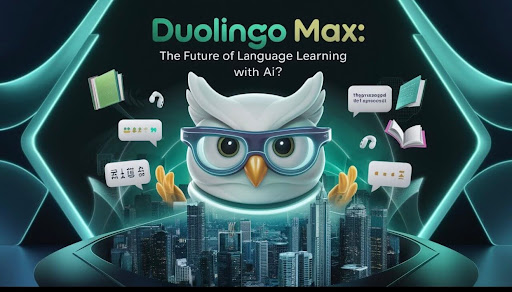
PITTSBURGH, PA — Duolingo, the popular language-learning app, is positioning artificial intelligence (AI) as the cornerstone of its ambitious plans to broaden its educational offerings well beyond languages. Matthew Skaruppa, Duolingo’s Chief Financial Officer, recently revealed that AI technologies will play a pivotal role in the company’s strategy to evolve into a comprehensive learning platform.
Traditionally known for its gamified language courses, Duolingo is already extending its reach with new products like Duolingo ABC, aimed at early childhood literacy, and Duolingo Math, which targets foundational math skills. Skaruppa explained during a recent earnings call that these initiatives are just the beginning of the company’s shift toward leveraging AI-driven personalization across diverse educational areas.
“Our vision is to transform Duolingo from a language-learning tool into a broader educational platform powered by AI,” Skaruppa said. “AI enables us to tailor learning experiences for each user, making education more accessible and effective.”
AI-Powered Personalization Driving Growth
Duolingo’s machine learning algorithms have long adjusted language lessons to match users’ skill levels and learning pace. Now, these same AI capabilities are being adapted to deliver customized instruction in other subjects. The company recently introduced an AI-powered tutor, branded as “Duo Max,” which provides interactive lessons, instant feedback, and conversational practice in real time.
According to the CFO, AI-driven tutoring can democratize access to personalized education — a service that historically required costly one-on-one instruction. This AI focus supports Duolingo’s mission to reach learners worldwide, including those in underserved communities.
Meeting Demand for Broader Educational Content
Demand for digital educational resources has surged, particularly among families and younger learners. Duolingo is capitalizing on this trend by expanding its curriculum beyond language to include K-12 fundamentals such as reading and math. This aligns with broader shifts in education technology accelerated by the COVID-19 pandemic and evolving learning needs.
Financially, Duolingo continues to grow steadily, boasting over 100 million monthly active users and rising subscription revenue. However, Skaruppa emphasized that sustainable growth will depend on successfully integrating AI across all learning experiences and expanding Duolingo’s scope beyond languages.
Challenges in an Evolving EdTech Landscape
Despite its strengths, Duolingo faces intense competition from other edtech companies leveraging AI. Additionally, developing effective AI-powered content across various subjects will require extensive research, quality control, and ethical considerations.
Nonetheless, Duolingo’s deep experience in user engagement and adaptive learning technology provides a strong foundation to compete. The company plans to invest heavily in AI talent and content development as it pushes forward with its expansion.
Looking Ahead
Duolingo’s CFO’s remarks highlight a bold new chapter for the company — one where AI is not just a feature but the driving force behind a comprehensive, multi-disciplinary educational platform. The company aims to make learning more personalized, scalable, and accessible, redefining how millions of users around the world acquire new skills.
Baidu Shares Tumble Amid Intensifying AI Competition in China
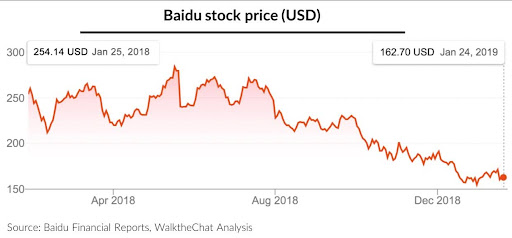
BEIJING — Baidu Inc., one of China’s leading technology giants, saw its shares decline sharply as investors grew increasingly concerned about the escalating battle for dominance in the country’s fast-evolving artificial intelligence (AI) sector. The stock’s drop reflects broader market anxieties surrounding heightened competition from both established players and nimble startups in China’s AI race.
Once regarded as the frontrunner in China’s AI development, Baidu now faces mounting pressure from domestic rivals like Alibaba, Tencent, and a wave of emerging AI startups backed by significant government and private funding. These competitors are aggressively developing advanced AI technologies, including large language models and generative AI, putting Baidu’s market position under strain.
Investor Sentiment Turns Cautious
The slide in Baidu’s shares signals investor concerns over whether the company can maintain its leadership amid rapid innovation and increasing regulatory scrutiny in China’s tech sector. Analysts point to recent delays in key product rollouts and a need for Baidu to accelerate its AI commercialization efforts to keep pace with competitors.
“The AI space in China is incredibly dynamic and competitive,” said an industry analyst familiar with Baidu’s operations. “Baidu must innovate faster and deliver tangible AI products that can generate sustainable revenue growth or risk losing market share.”
China’s AI Landscape Grows More Crowded
China’s government has made AI a national priority, funneling massive investments into research and development while encouraging tech companies to scale up AI capabilities. As a result, the competitive environment has intensified, with multiple companies racing to capture leadership in generative AI, autonomous driving, cloud AI services, and smart devices.
Baidu, despite its early lead and significant investments in AI research centers, now confronts the challenge of differentiating its offerings in a crowded field. Its AI assistant “Ernie Bot” competes directly with Alibaba’s “Tongyi Qianwen” and Tencent’s AI products, each seeking to win user adoption and enterprise partnerships.
Financial Impact and Strategic Adjustments
Baidu’s recent quarterly results reflected mixed signals, with strong core search and cloud revenues offset by increased R&D spending on AI initiatives. The company has reiterated its commitment to AI but acknowledges that monetizing next-generation AI technology will take time.
To bolster its competitive stance, Baidu is reportedly restructuring some AI projects and forging new partnerships in key sectors such as healthcare, autonomous vehicles, and enterprise AI solutions.
Looking Forward
While Baidu remains a heavyweight in China’s technology ecosystem, the intensifying AI competition is forcing the company to adapt quickly. Investors and market watchers will be closely monitoring Baidu’s ability to innovate and capitalize on AI amid a rapidly shifting landscape.
“The AI race in China is a marathon, not a sprint,” noted one market strategist. “Baidu’s next moves will be critical in determining if it can hold its ground or cede leadership to more agile players.”
Nvidia’s Jensen Huang to Students: “Here’s How I’d Leverage AI If I Were in School Today”
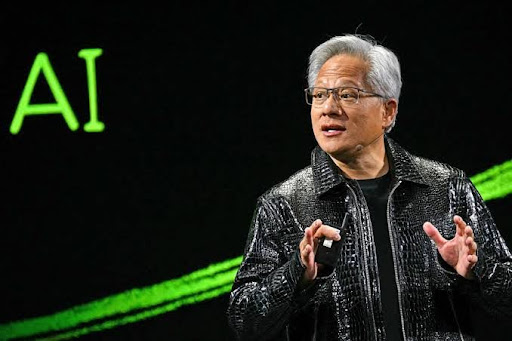
TAIPEI — Nvidia CEO Jensen Huang has shared an inspiring message to today’s students, urging them to embrace artificial intelligence not as a threat, but as a transformative tool for learning, creativity, and career growth. Speaking at a recent international forum, Huang offered personal insights on how he would approach education in an AI-driven world if he were a student today.
“If I were a student right now, I would learn to use AI as my co-pilot,” Huang said. “AI isn’t just a subject — it’s a skill, a platform, and a multiplier of talent. The sooner you learn how to use it, the more powerful you’ll become.”
AI as a Learning Accelerator
The Nvidia CEO highlighted how students can now supercharge their productivity, curiosity, and problem-solving abilities with AI tools — from language models and coding assistants to AI-driven design software and simulation platforms.
Huang advised students to view AI not as a replacement for thinking, but as a thinking companion. “Whether you’re studying science, art, engineering, or even literature, AI can help you ask better questions, test more ideas, and explore solutions that were once out of reach,” he said.
A New Era of Self-Directed Education
Huang’s remarks reflect a broader theme: the shifting role of education in the age of AI. Traditional learning paths are giving way to more fluid, interdisciplinary, and tech-augmented models. Huang emphasized that students who take charge of their own learning — aided by AI — will be best positioned to thrive in the future.
“You can now teach yourself anything,” he said. “The resources are there. With AI, your ability to learn is no longer limited by access to a teacher or a classroom.”
The Power of Experimentation
He encouraged students to experiment early and often. Build projects, collaborate with AI tools, and test ideas in the real world, Huang advised. “The students who’ll stand out are the ones who not only understand AI, but use it to create — to make apps, write books, compose music, design solutions, and build companies.”
Future-Proofing Through AI Fluency
As head of Nvidia — a global leader in AI hardware and computing infrastructure — Huang has been a driving force in accelerating AI adoption across industries. His advice underscores a core belief: AI fluency will soon be as fundamental as reading or arithmetic.
“The world’s most valuable skill will be knowing how to work with AI,” Huang concluded. “Start now. Use it to learn. Use it to build. And use it to imagine things the world has never seen before.”
Blacksolvent Takeaway
Jensen Huang’s message is both a challenge and an invitation. For the next generation of students, AI isn’t just changing the classroom — it’s redefining the meaning of intelligence, creativity, and career readiness. Those who adapt early could become the architects of tomorrow’s breakthroughs.