Shifting Frontlines of Global Power
From drone warfare in Eastern Europe to grassroots gender advocacy in Pakistan and top-tier military reform in Washington, today’s headlines paint a picture of a world in transformation. Power is being restructured—on the battlefield, in communities, and behind closed doors at the Pentagon.
Whether through missiles or microgrants, these developments reveal a global shift toward more strategic, streamlined, and people-driven change. The systems of old are being challenged—and what rises in their place may define the next era of global order.
Canada Launches Targeted Funding Initiative to Strengthen Gender Equality in

Islamabad, Pakistan — In a progressive step toward promoting gender equality and women’s empowerment, the High Commission of Canada in Pakistan has opened a new round of Call for Proposals under the Canada Fund for Local Initiatives (CFLI). This round specifically offers Micro Grants to civil society organizations (CSOs) that are either led by women or focused on serving women and girls across Pakistan.
This grant initiative reflects Canada’s ongoing commitment to its feminist foreign policy, which emphasizes support for local, community-driven efforts to dismantle structural barriers faced by women and girls. The Micro Grants are designed to empower grassroots organizations that work directly within communities to address gender inequalities, strengthen women’s rights, and promote inclusive development.
Organizations can apply for financial support ranging from CAD 5,000 to CAD 25,000 per project. The funding will support small-scale but high-impact interventions that contribute to gender equity and social inclusion. Projects may include community advocacy campaigns, capacity-building for women entrepreneurs, gender-sensitive education programs, services for survivors of gender-based violence, and other initiatives that address the specific needs and challenges faced by women and girls.
To be eligible, organizations must be locally registered in Pakistan and demonstrate a commitment to women’s empowerment. The selection process will prioritize proposals from organizations that are both led by women and directly engaged in serving underrepresented or marginalized female populations. These include ethnic minorities, rural women, young girls, and women living with disabilities. In addition to a strong track record in delivering gender-focused programs, applicants must also demonstrate transparency in financial management and community engagement.
The deadline for proposal submission will be announced shortly, and applications are to be submitted online through the official CFLI platform. The Canadian High Commission will also host a virtual information session to guide interested applicants through the eligibility requirements and application process.
According to a representative of the High Commission of Canada in Islamabad, this initiative is more than a funding opportunity—it is an investment in leadership and innovation at the grassroots level. “Empowering women-led organizations is central to our mission of creating sustainable, inclusive development. These grants are about equipping local change-makers with the tools and resources they need to build stronger, more equitable communities,” the spokesperson stated.
At a time when Pakistan continues to face persistent gender-based challenges in education, employment, healthcare, and representation, this targeted funding could have far-reaching impact. The CFLI Micro Grants represent a critical opportunity for women-led and women-serving organizations to expand their reach and scale up transformative work that reshapes the future of gender equity in Pakistan.
For further details, interested organizations are encouraged to visit the official CFLI Pakistan website or reach out to the High Commission of Canada for direct inquiries.
Russia-Ukraine War: Escalations Deepen on Day 1,167 as Drone Attacks Hit Moscow and Fighting Spreads to Kursk
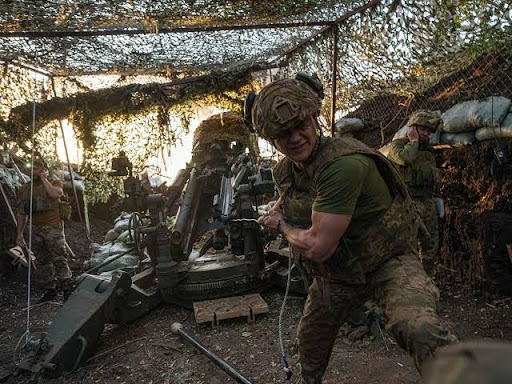
The war between Russia and Ukraine entered its 1,167th day today with a sharp escalation in hostilities on both sides, underscoring how deeply entrenched and volatile the conflict remains. Ukraine has launched a sweeping series of drone attacks that disrupted life in Moscow and paralyzed its major airports, while also advancing a new military push in Russia’s western Kursk region.
Russian officials confirmed that at least 19 drones targeted the capital overnight, triggering emergency responses and forcing the temporary shutdown of all four of Moscow’s main airports. Although air defenses reportedly intercepted the drones, debris caused highway disruptions, raising alarm across the city. This marked the second consecutive night of aerial incursions reaching dangerously close to the Kremlin, just days ahead of Russia’s Victory Day celebrations.
At the same time, Ukrainian forces began a renewed offensive across the border in Kursk, where troops launched coordinated attacks near Tyotkino and Glushkovo. Reports suggest that Ukrainian forces struck a Russian drone command center and employed mine-clearance teams, armored vehicles, and paratroopers in a calculated advance. Analysts believe this operation is part of a broader effort to regain momentum lost since Ukraine’s previous cross-border incursion in August last year.
In response, Russia unleashed a wave of drone strikes across Ukrainian territory. Odesa and Kharkiv were among the hardest hit. One civilian was killed in Odesa, while Kharkiv endured at least 17 drone strikes in just two hours. Additional Russian attacks on the Donetsk and Sumy regions led to the deaths of at least three more civilians.
Ukraine has publicly rejected a ceasefire offer floated by Russian President Vladimir Putin, who proposed a temporary three-day halt in fighting to coincide with national commemorations. Ukrainian officials dismissed the proposal as a symbolic gesture aimed at public relations, instead calling for a longer and more substantive truce that could lead to real peace negotiations.
Meanwhile, civilian infrastructure continues to bear the brunt of the conflict. Widespread power outages, damage to roads, and mass evacuations have been reported in both Ukraine and the Russian border regions. As the war stretches into its fourth year, the cost in lives, resources, and global political stability continues to mount.
With neither side showing signs of retreat, and military engagements now extending deeper into Russian territory, the world watches with growing concern as the war’s end remains nowhere in sight.
U.S. Defense Secretary Pete Hegseth Slashes Senior Military Ranks in Push for Leaner, Combat-Ready Force
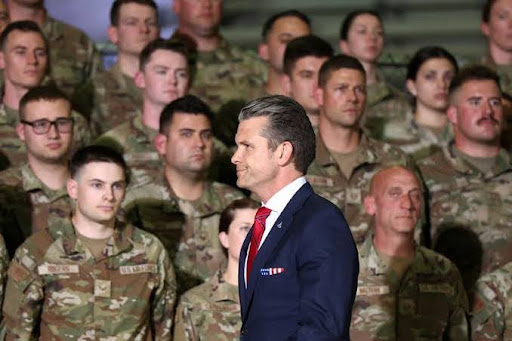
In a sweeping reform aimed at transforming the structure of the United States Armed Forces, U.S. Defense Secretary Pete Hegseth has announced a bold directive to reduce the number of senior military leaders by 20%. The move, revealed today, marks one of the most significant leadership shake-ups in recent Pentagon history and signals a pivot toward a leaner, less bureaucratic chain of command.
The decision comes as part of Hegseth’s broader “Less Generals, More GIs” strategy—an initiative focused on minimizing top-heavy leadership and reallocating resources to the rank-and-file troops serving on the frontlines. Under the new plan, the number of four-star generals and admirals will be slashed by a fifth, while overall general and flag officer roles across all service branches will be reduced by 10%.
Speaking from the Pentagon, Hegseth underscored the need to recalibrate military leadership to match modern warfare demands. He pointed to historical contrasts, noting that during World War II, just 17 top officers commanded over 12 million service members. Today, 44 four-star officers preside over a total force of only 2.1 million. Hegseth called this imbalance “unsustainable” and said the top ranks must reflect operational realities, not bureaucratic legacy.
The overhaul will be executed in two phases. The first targets immediate reductions in high-ranking posts, especially in joint and regional combatant commands. The second phase involves a broader assessment and realignment of leadership roles throughout all branches, including the possibility of consolidating or streamlining current military commands.
The directive has already sparked debate in military and political circles. Supporters say the cuts are overdue and will allow for faster decision-making, more agile operations, and better use of defense funding. Critics, however, warn that reducing top leadership too quickly could risk losing institutional knowledge, weaken command structures, and politicize military decision-making during a period of rising global tension.
This announcement follows a wave of recent changes within the Department of Defense, including reshuffles in top military appointments and increasing scrutiny of defense expenditures. Hegseth, a former Army officer and media commentator, has made no secret of his intention to challenge what he calls “the Pentagon’s bloated leadership culture.”
As the U.S. navigates a complex global security environment, the coming months will test whether this downsizing effort delivers greater operational focus—or generates internal disruption within America’s armed forces. The world’s most powerful military is now undergoing a significant transformation at the very top—and its outcomes may reshape U.S. defense posture for years to come.