The Age of Founder Conviction and Ecosystem Maturity
As Q1 2025 draws to a close, one message echoes louder than any headline — we are witnessing the rise of a new generation of founders and operators who are building not just fast, but with fierce conviction and long-term intent. The startup ecosystem is no longer just a playground for experimentation; it’s becoming a disciplined arena for high-stakes execution, values-driven leadership, and cross-sector innovation.
Take Tapcheck, for instance — a husband-and-wife-led fintech venture that didn’t just raise $225 million, but did so with a clear mission to fix payroll at its core. Their model shows that family-led companies can scale with heart, offering both empathy and efficiency to solve one of the most overlooked pain points in modern employment.
Then there’s Peter Thiel stepping onto the board of General Matter, a move that reflects not only a strategic bet on enriched uranium, but also a broader signal: bold, controversial technologies are finding their place at the center of institutional and entrepreneurial focus. It’s a vote of confidence in frontier science, and in the leaders capable of navigating the regulatory, ethical, and infrastructural weight that comes with it.
And finally, we look at Q1’s most active startup investors — not simply funding ideas, but strategically curating the future of technology across AI, climate, fintech, and global infrastructure. Their investments are precise, their theses refined, and their appetite grounded in both caution and long-term belief.
Together, these stories represent a subtle but powerful shift: the startup world is growing up. It’s not just about blitzscaling anymore. It’s about intentional growth, meaningful value, and a deeper commitment to building companies that can withstand cycles — and reshape systems.
Founder conviction is no longer a buzzword. It’s the new competitive edge.
Inside Q1 2025’s Power Players: The Most Active Startup Investors Shaping the Future
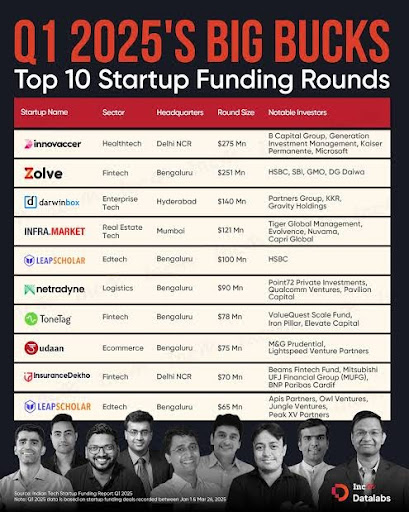
As the world continues to grapple with economic uncertainty, inflationary pressures, and geopolitical tension, the startup ecosystem has demonstrated remarkable resilience. While the investment landscape saw a slight dip in overall funding, Q1 2025 made one thing clear — innovation is not slowing down. In fact, the most active investors this quarter proved that strategic capital, when deployed wisely, can still generate momentum for early-stage ventures across the globe.
Blacksolvent News takes a deep dive into the investors who drove deal activity in Q1 2025, highlighting the venture capitalists, angel networks, corporate arms, and accelerators that dominated startup financing. From climate innovation to generative AI, fintech to health tech, these players aren’t just writing checks — they’re shaping the future of global entrepreneurship.
Q1 2025 in Review: Strategic Caution Meets Bold Vision
Venture funding declined by approximately seven percent compared to Q4 2024, but deal volume remained consistent. Rather than pulling back completely, investors exercised more precision in how and where they invested. This quarter saw capital flowing toward founders with strong fundamentals, proven traction, and adaptable business models.
Early-stage funding, particularly Seed and Series A rounds, remained dominant. A closer look at trends reveals a surge in climate-focused startups, a rapid rise in generative AI tools, heightened interest in fintech for underbanked populations, and continued enthusiasm for health tech innovations — especially in mental health, diagnostics, and wearable technology.
Meet the Most Active Startup Investors of Q1 2025
Leading the pack this quarter was Andreessen Horowitz (a16z), which closed 32 deals and made bold bets in AI infrastructure, Web3, and consumer technology. One standout move was their $15 million investment in MindMesh, a GenAI platform aimed at transforming enterprise knowledge sharing. With an eye toward decentralized applications, a16z expanded its focus to include both frontier tech and infrastructure plays.
Y Combinator continued its reign as the most prolific accelerator, launching over 80 startups in its Winter 2025 batch. This cohort featured a notable increase in founders from Africa, Latin America, and Southeast Asia, as well as a growing number of climate tech and B2B SaaS ventures.
Sequoia Capital followed closely, with 25 deals spanning fintech, health tech, and AI. Among their most significant moves was a $40 million Series A investment in TheraIQ, a mental health platform leveraging AI for personalized therapy plans. Sequoia maintained its global presence with strong activity across the U.S., India, and Europe.
Tiger Global Management, while adopting a more conservative posture post-2022, still managed to close 18 deals. The firm shifted toward smaller early-stage investments, favoring companies in B2B payments and e-commerce enablement. Its $10 million investment in PayBolt, a digital payment infrastructure provider, reflects this more disciplined approach.
Lightspeed Venture Partners demonstrated a renewed commitment to productivity-focused AI tools, finalizing 20 deals. Their headline investment this quarter was a $25 million Series A round in PromptDesk, an AI-powered collaborative workspace.
IndieBio and SOSV made significant waves in deep tech and climate innovation. With more than 15 deals, they aggressively backed companies working in synthetic biology, carbon capture, and alternative proteins — further positioning themselves as leaders in sustainability-focused investments.
General Catalyst emerged as one of the more values-driven players, completing 14 investments while also launching a $1.5 billion fund dedicated to “responsible innovation.” Their standout investment was a $12 million round in CertChain, a blockchain-based supply chain verification platform.
Plug and Play Ventures expanded its accelerator presence across international markets, backing over 25 startups across sectors. Their model of connecting early-stage companies with corporate innovation partners gained momentum in Q1.
SoftBank Vision Fund II, once cautious, re-entered the market with a strategic eye. While they closed fewer deals — around 10 — each one was significant in size and focus. Their $20 million investment in SmartRoute, a logistics platform for e-commerce businesses, signals a renewed interest in AI-powered logistics.
Rounding out the top 10 was First Round Capital, which quietly built momentum with 12 deals. Known for backing founders at the pre-seed and seed stages, the firm favored experienced entrepreneurs with prior exits this quarter.
Regional Momentum: The Global South is Rising
Q1 2025 also marked a shift in global capital flow, with more funding being directed toward African, Latin American, and Southeast Asian startups. African venture firms such as Norrsken22, Launch Africa Ventures, and TLcom Capital played active roles in multiple deals, particularly in fintech, agritech, and logistics.
In Latin America, firms like Kaszek Ventures and Monashees doubled down on consumer fintech and edtech. The region’s startups saw renewed interest thanks to stable macroeconomic indicators and mobile-first consumer trends.
Southeast Asia experienced a boom in startup formation, especially in Indonesia, Vietnam, and the Philippines. Firms such as East Ventures and Golden Gate Ventures ramped up investments in e-commerce infrastructure and retail tech, targeting fast-growing digital economies.
The Corporate Comeback: CVCs Go All In
Corporate venture arms saw a resurgence in Q1, with major players launching targeted initiatives. Google Ventures continued its foray into AI, investing in tools that enhance enterprise productivity. Salesforce Ventures placed bets on B2B sales automation and customer experience startups. Meanwhile, Intel Capital remained active in edge computing and AI hardware, investing in chips designed for real-time inference and IoT applications.
What’s Next: Q2 2025 Outlook
Looking ahead, experts predict a gradual increase in average deal size, particularly in AI infrastructure and climate technology. Investors are expected to stay disciplined but open to opportunities with strong unit economics and early revenue traction. Consolidation is likely to rise as weaker startups are acquired by more stable players. Additionally, ESG-focused funds and impact investors are expected to increase activity in areas such as circular economy solutions and green energy.
Conclusion
Despite a cautious macroeconomic backdrop, the first quarter of 2025 highlighted just how vital early-stage investors are to driving global innovation. From emerging markets to Silicon Valley, these power players didn’t just keep the startup ecosystem alive — they helped it evolve. As new founders continue to reshape the way we live, work, and connect, their journey will be guided and accelerated by the sharp instincts of these influential investors.
Peter Thiel Takes Board Seat at General Matter, the Enriched Uranium Startup Turning Heads in the Energy Sector
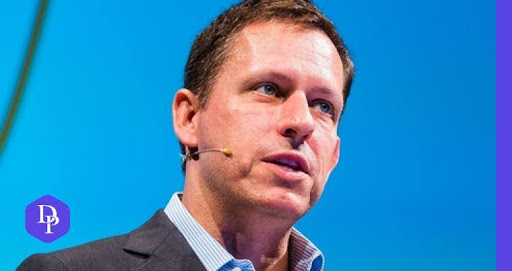
In a move that signals a significant shift in the energy investment landscape, billionaire entrepreneur and venture capitalist Peter Thiel has officially joined the board of General Matter, a rising startup focused on the production and commercialization of enriched uranium. The decision, confirmed earlier this week, places one of the world’s most influential technologists at the heart of a company aiming to redefine how the world thinks about nuclear energy and next-generation fuel sources.
This development comes at a critical moment when the global push toward clean, stable, and scalable energy alternatives is at its peak. Thiel’s involvement brings not only capital but also strategic weight to General Matter’s vision, raising new questions — and possibilities — around the future of nuclear energy innovation.
General Matter: At the Core of a Nuclear Resurgence
Founded in 2022 by a team of physicists, nuclear engineers, and energy policy veterans, General Matter has quickly become one of the most closely watched startups in the nuclear space. Its mission is to safely and efficiently produce high-assay low-enriched uranium (HALEU), a critical fuel type for advanced nuclear reactors. HALEU is seen by many as the key to unlocking a new era of modular, scalable nuclear power — reactors that are safer, smaller, and capable of delivering clean energy at unprecedented scale.
While HALEU production has historically been dominated by state-controlled entities in Russia, General Matter seeks to shift that balance. By developing a proprietary enrichment process that is both faster and more secure, the company hopes to establish the United States as a global leader in advanced nuclear fuel supply. Early pilots and partnerships with national labs have already positioned General Matter as a credible commercial contender.
Peter Thiel’s Strategic Entry
Peter Thiel’s board appointment marks a milestone not just for General Matter, but for the broader nuclear tech sector. Known for backing transformative companies like PayPal, Palantir, and SpaceX, Thiel has built his reputation on spotting early-stage technologies that reshape industries. His entry into the nuclear energy conversation adds a new layer of legitimacy — and intensity — to the ongoing race to modernize global energy systems.
Thiel has long been an advocate for energy innovation, often voicing concerns about the West’s stagnation in developing foundational technologies. His decision to align with General Matter reflects his belief that the future of energy must be rooted in scientific excellence and geopolitical independence. According to sources close to the company, Thiel is expected to take an active role in advising on government relations, fundraising strategy, and international expansion.
Implications for the Clean Energy Economy
Thiel’s move comes at a time when the clean energy economy is being reshaped by shifting regulatory frameworks, volatile energy prices, and climate-driven urgency. Governments across the U.S. and Europe have introduced new subsidies and incentives aimed at accelerating the deployment of nuclear technologies — particularly small modular reactors (SMRs) and advanced reactors that require enriched uranium.
General Matter’s business model directly aligns with these policies. By positioning itself as a key HALEU supplier, the startup stands to benefit from multibillion-dollar procurement contracts and long-term power agreements. Its work has already attracted attention from major defense contractors and private utility providers, many of whom are exploring long-term partnerships.
With Peter Thiel now at the table, the company’s ability to attract institutional capital, navigate federal regulation, and scale its enrichment technology has been significantly strengthened.
Reactions from the Industry
The announcement has stirred a mix of excitement and caution in the energy and startup worlds. Proponents of nuclear innovation have praised the move, noting that Thiel’s presence will shine a much-needed spotlight on a sector that has long been underfunded and misunderstood.
Critics, however, have raised questions about the potential privatization of such a sensitive technology. Enriched uranium, even in its low-assay form, remains a material of interest in global nonproliferation discussions. As such, General Matter’s next steps will likely be scrutinized not only by investors, but also by international watchdogs and energy regulators.
Still, industry insiders agree that the startup’s success could catalyze a new era for nuclear fuel innovation, one that blends private capital with strategic national interest.
What This Means for the Future
Peter Thiel’s involvement with General Matter sends a powerful signal to founders, funders, and policymakers alike: nuclear energy is no longer a backroom conversation — it’s front and center in the next great energy transformation. As the world searches for stable, zero-emissions alternatives to fossil fuels, startups like General Matter may well define the new industrial backbone of the 21st century.
With increased attention, deeper capital pools, and a renewed policy tailwind, enriched uranium might soon be less about Cold War legacy — and more about climate resilience and global energy equity.
Conclusion
The fusion of deep science and bold capital has always been the recipe for technological revolutions. Peter Thiel’s decision to join the board of General Matter is more than a headline — it’s a strategic move that could reshape how the world powers itself in the decades ahead. As clean energy debates evolve and nuclear makes a comeback, Blacksolvent News will be following closely — keeping you at the core of the world’s next energy transformation.
Texas-Based Tapcheck Secures $225 Million to Redefine Payroll Access — Inside the Husband-and-Wife Duo Behind the Bold Vision
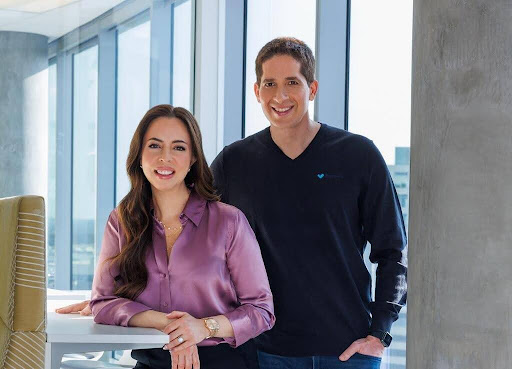
In one of the largest fintech raises of Q1 2025, Texas-based startup Tapcheck has closed a staggering $225 million in fresh funding, signaling growing momentum in the earned wage access (EWA) space. Founded by the husband-and-wife team Ron and Kayling Gaver, the company is on a mission to rewrite the rules of payroll — making financial flexibility a core employee benefit for millions of American workers.
As the cost of living continues to rise and paycheck-to-paycheck living remains a reality for nearly 60% of the U.S. workforce, Tapcheck’s model is striking a powerful chord. With this latest round — a mix of equity and debt — the company is doubling down on national expansion, product development, and employer partnerships across retail, healthcare, logistics, and hospitality.
The Founders: A Family-Driven Vision for Financial Wellness
Tapcheck is more than just a business venture for the Gavers — it’s a personal mission. With backgrounds in healthcare technology and corporate finance, Ron and Kayling built Tapcheck in 2019 with a shared belief that workers shouldn’t have to wait two weeks to access the money they’ve already earned. What began as a family-led project to ease financial strain for hourly workers has now blossomed into one of the most promising fintech platforms in the U.S.
Their deep understanding of both the employer’s and employee’s financial pain points helped them craft a solution that balances accessibility, compliance, and scalability. The couple’s unique dynamic — both partners equally invested in every product decision and growth milestone — has become a defining strength of the company’s culture.
What Tapcheck Does Differently
At its core, Tapcheck offers on-demand access to earned wages through an intuitive mobile app. Employees can see how much they’ve earned in real time and transfer available funds instantly to their bank account — without involving HR or payroll teams. But what sets Tapcheck apart is its frictionless, employer-integrated model.
Unlike some competitors, Tapcheck requires no changes to existing payroll systems. It works as a plug-and-play layer that sits alongside standard payroll infrastructure, making it easy for employers to offer the benefit without additional administrative burden. Tapcheck fronts the advance to the employee and collects repayment automatically on payday, minimizing employer risk.
In addition to wage access, Tapcheck has rolled out a growing suite of financial wellness tools — from budgeting education to personalized financial coaching. These features are designed not just to provide liquidity, but to foster long-term financial health. For employers, this translates into higher retention, reduced absenteeism, and a more stable, motivated workforce.
The $225 Million Raise: What It Means
This new funding round, led by a mix of growth-stage fintech investors and institutional lenders, brings Tapcheck’s total capital raised to over $300 million. Sources close to the deal say the equity portion was highly competitive, as investors jockeyed to back what many are calling the most scalable earned wage access platform on the market today.
The capital will be used to rapidly scale operations across all 50 states and deepen Tapcheck’s partnerships with large employers. The company is also investing in product R&D, with plans to introduce AI-driven insights that help users manage cash flow, avoid overdraft fees, and build emergency savings over time.
There is also talk of international expansion, with Tapcheck reportedly exploring pilot programs in Canada and the UK — markets that are beginning to adopt more flexible wage models.
The Bigger Picture: EWA as a Financial Safety Net
Tapcheck’s rise comes amid a broader reevaluation of how employers support financial well-being. With inflation pressuring household budgets and credit card debt reaching record highs, more companies are looking to provide real-time wage access as a core employee benefit — not just a perk.
Earned wage access, once seen as a niche offering, is now being embraced by major employers as a strategic retention tool. Tapcheck’s seamless integration, compliance-first design, and employee-friendly user experience give it a significant edge in a market that’s growing more competitive by the quarter.
Critics of the EWA model have raised concerns about fees and dependency, but Tapcheck has differentiated itself with a transparent pricing structure and a strong emphasis on responsible usage. The company has positioned itself as both a tech platform and an advocate for financial inclusion.
Conclusion
Tapcheck’s $225 million raise is more than just a funding headline — it’s a signal that payroll innovation is entering a new era. By combining cutting-edge technology with a deeply personal mission, Ron and Kayling Gaver have built a company that doesn’t just move money faster — it empowers people to live more stable, confident lives.
As the debate over financial equity, employer responsibility, and real-time pay continues to heat up, Tapcheck is poised to become one of the defining fintech stories of the decade. And at its heart is a husband-and-wife team proving that family values and bold innovation can thrive hand in hand.