The Intelligence Age Unfolds
As we stand at the edge of a new technological epoch, the stories of Aitech’s IQSat, Nina Schick’s generative AI warnings, and the mounting pressure AI places on global power systems converge to form a single, unmistakable narrative: the rise of intelligent systems is no longer speculative—it is here, advancing at a pace that challenges the frameworks we’ve long depended on.
From space to society, from global governance to the energy grid, artificial intelligence is redefining what is possible. In orbit, AI-enabled satellites like IQSat promise autonomy and decision-making capabilities once reserved for science fiction. On Earth, visionaries like Nina Schick are urging world leaders to confront the darker undercurrents of synthetic media and algorithmic influence. Simultaneously, the energy sector is bracing for a future where machines not only think—but also demand a growing share of our planetary resources to do so.
These are not isolated developments. They are deeply interconnected signals of a transformation that is economic, environmental, political, and existential. The systems we build—intelligent satellites, content generators, and power-hungry infrastructures—are beginning to shape our values, our realities, and our resilience.
As Blacksolvent continues to chronicle this transformation, the central question facing humanity is no longer whether AI will change the world—but how we will shape the intelligence that is now shaping us.
The age of artificial intelligence is not approaching. It has already begun.
Aitech Launches IQSat: Revolutionary AI-Powered PicoSat Platform Debuts at Space Symposium
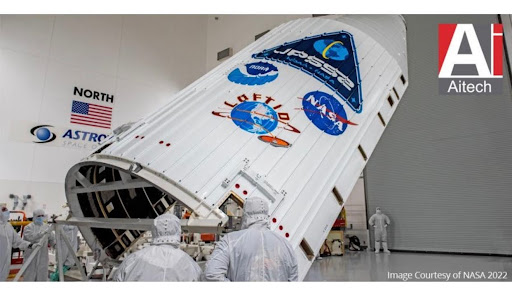
In a move that underscores the growing convergence between artificial intelligence and space technologies, Aitech Systems has officially introduced its latest innovation, the IQSat, at the 39th annual Space Symposium in Colorado Springs. The newly unveiled platform is an advanced, AI-enabled PicoSat designed to perform sophisticated tasks autonomously in space, significantly reducing reliance on ground control systems.
Aitech, a long-time leader in rugged embedded computing systems for defense and aerospace, has described IQSat as a transformative leap in satellite design. Unlike traditional small satellite platforms, IQSat integrates powerful onboard computing capabilities with real-time artificial intelligence, enabling it to analyze data, detect patterns, make mission-critical decisions, and respond to dynamic conditions—all while in orbit.
According to Anthony Lai, Director of Space Solutions at Aitech, IQSat represents the culmination of decades of engineering expertise and the company’s strategic investment in next-generation technologies. “IQSat is more than a satellite; it’s a fully autonomous space platform capable of thinking and adapting in real time,” said Lai during the launch announcement. “This innovation brings a new level of intelligence to satellite missions, enabling operators to deploy smaller, smarter, and more efficient systems in low Earth orbit.”
The platform is built on Aitech’s proven SpaceVPX architecture, which is engineered to endure the extreme conditions of space. Its open modular design ensures that IQSat can be tailored to various mission profiles, from scientific research and tactical reconnaissance to environmental monitoring and communications. While compact and lightweight, IQSat is equipped with robust onboard processing capabilities. This allows it to process raw data directly in orbit, drastically cutting down the time needed to send information to ground stations for analysis.
One of IQSat’s most notable advancements lies in its ability to conduct AI-driven operations at the edge. This means the satellite can identify objects such as wildfires, weather anomalies, or moving vehicles and make autonomous decisions based on real-time situational awareness. Such capabilities could be especially crucial in remote sensing, defense surveillance, and rapid-response scenarios where time-sensitive information is paramount.
IQSat also incorporates advanced security protocols, ensuring that data collected and transmitted meets the cybersecurity requirements of both commercial operators and government agencies. With space becoming an increasingly contested and critical domain, this level of built-in security has been lauded by experts as essential for the future of space-based operations.
Reactions from the space industry have been overwhelmingly positive. Analysts attending the symposium noted that AI-powered platforms like IQSat are likely to play a central role in the evolution of satellite constellations and autonomous space missions. With growing interest in low-cost, high-functionality spacecraft, Aitech’s offering is well-positioned to attract attention from both public and private sector players looking to expand their capabilities in orbit.
Aitech has hinted at ongoing discussions with potential collaborators and early adopters, suggesting that field deployments and pilot missions for IQSat may begin sooner rather than later. As the demand for real-time, actionable space data continues to surge, the company’s AI-centric approach could help redefine the standards for satellite performance and mission efficiency.
By blending edge computing, AI, and modular space-grade engineering into one streamlined platform, Aitech’s IQSat marks a significant milestone—not just for the company, but for the future of intelligent space exploration.
Nina Schick Explores the Disruptive Power of Generative AI Across Business, Politics, and Society

Renowned author, geopolitical analyst, and artificial intelligence thought leader Nina Schick is bringing new urgency to the global conversation around generative AI with her ongoing work highlighting its transformative—and often disruptive—impact on business, politics, and society. As one of the earliest voices to explore the implications of synthetic media and AI-generated content, Schick’s insights have become increasingly relevant in a world being rapidly reshaped by intelligent machines.
Through her research, public engagements, and publications, Schick has positioned generative AI not as a distant future technology, but as a present and accelerating force that is already reshaping how organizations operate, how citizens engage with politics, and how society perceives truth, identity, and creativity. Her perspective combines a deep understanding of technology with a sharp analysis of global governance, media systems, and democratic resilience.
Speaking at recent global forums and AI policy summits, Schick has warned that generative AI is redefining information ecosystems. She argues that as AI-generated content becomes indistinguishable from human-produced content, the very notion of trust in digital information is under threat. This phenomenon, which she has previously called the “infocalypse,” is now manifesting in real-time, influencing elections, media narratives, and public opinion at an unprecedented scale.
In the business world, Schick believes generative AI presents both a powerful opportunity and a complex challenge. On one hand, companies are harnessing tools like large language models and synthetic media generators to improve customer service, automate workflows, enhance product design, and personalize user experiences. On the other, the unchecked proliferation of synthetic content is creating risks in brand authenticity, intellectual property rights, and misinformation management.
Politically, Schick has been vocal about the role of AI in shaping democratic processes. She notes that generative technologies are now capable of producing highly realistic fake videos, audio clips, and documents—tools that can be easily weaponized by bad actors to spread disinformation, manipulate voter behavior, and erode public trust. She emphasizes the need for urgent international collaboration to set ethical frameworks, governance standards, and technological safeguards to prevent AI from being used as a tool for authoritarianism or political chaos.
Socially and culturally, Schick sees generative AI as a double-edged sword. While it offers new creative possibilities for artists, musicians, writers, and educators, it also raises fundamental questions about originality, ownership, and the role of human imagination in a world increasingly co-authored by machines. She calls for deeper public awareness, digital literacy, and inclusive policy-making to ensure that these tools empower rather than exploit.
Nina Schick’s advocacy has caught the attention of governments, tech leaders, and civil society organizations alike. She continues to consult for major institutions on AI governance and appears frequently in international media to share her expertise. Her message is clear: generative AI is not just a technological shift, but a societal transformation that demands foresight, regulation, and active civic engagement.
With her distinctive voice at the intersection of emerging technology and global affairs, Schick remains one of the most influential figures in shaping how the world navigates the age of intelligent content. As generative AI continues to evolve at breakneck speed, her work serves as both a wake-up call and a guidebook for decision-makers across industries and borders.
Artificial Intelligence Set to Surge Global Power Demand and Transform the Energy Sector
As artificial intelligence (AI) continues its rapid integration into every facet of modern life, its influence on the global energy landscape is becoming impossible to ignore. Industry experts and energy economists are sounding the alarm—and the opportunity—about AI’s growing appetite for electricity and its potential to fundamentally reshape how energy is produced, distributed, and consumed.
In what many are calling a new era of “energy intelligence,” the proliferation of AI-driven technologies is expected to drive a significant increase in global power demand over the next decade. From data centers running massive language models to autonomous manufacturing systems, intelligent infrastructure, and next-gen robotics, AI systems are consuming unprecedented amounts of electricity. This surge is forcing energy providers, governments, and regulators to reevaluate infrastructure planning, grid capacity, and long-term sustainability strategies.
Analysts note that data centers alone—particularly those supporting AI training and inference—are already responsible for a substantial portion of energy use in developed economies. As businesses integrate AI into their operations at scale, from retail analytics and supply chain optimization to real-time customer engagement and predictive maintenance, the demand for high-performance computing infrastructure is intensifying.
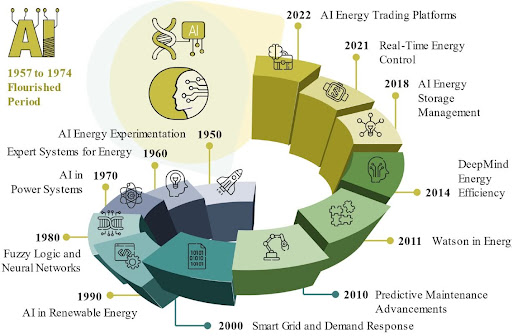
Yet, while AI presents a clear demand-side challenge, it also brings transformative potential to the energy sector itself. Energy companies are increasingly turning to artificial intelligence to optimize their operations. AI systems are now being used to forecast electricity consumption patterns, predict equipment failures, automate energy trading, and balance power loads more efficiently than traditional methods ever could. By integrating machine learning into smart grid technology, providers can reduce waste, cut costs, and respond dynamically to fluctuations in demand and supply.
Moreover, AI is expected to play a pivotal role in accelerating the transition to renewable energy. As solar, wind, and other renewables continue to scale, their variable nature poses reliability challenges for national grids. AI algorithms are helping mitigate these issues by providing real-time forecasting of weather conditions, enhancing battery storage optimization, and managing the intermittent flow of renewable power into the grid.
However, this transformation is not without its contradictions. While AI can make energy systems more intelligent and sustainable, the technology itself demands enormous resources. The global push toward electrification—now coupled with the exponential growth of AI—has raised concerns about whether current energy policies are equipped to handle the dual pressures of decarbonization and digitization. Balancing environmental commitments with the power needs of tomorrow’s technologies remains one of the defining policy dilemmas of the decade.
Governments and energy regulators around the world are beginning to respond. Some are exploring policies that encourage energy-efficient AI development, including the adoption of green data centers, carbon-offset requirements, and incentives for companies investing in low-impact AI infrastructure. Others are focusing on grid modernization and distributed energy systems, designed to absorb the unpredictable loads AI technologies may generate.
As AI cements its place as both a driver and disruptor of the energy economy, a new model for power generation and consumption is emerging—one that requires collaboration between technologists, energy providers, policymakers, and climate advocates. The convergence of AI and energy is not just about managing demand; it’s about reimagining an entire ecosystem.
In this rapidly evolving landscape, one thing is clear: artificial intelligence will not only consume power—it will redefine the way power flows through our societies, our economies, and our future.