Global Threads: The Human Cost of Politics and the Legacy of Design
As political decisions ripple across borders, the impact lands hardest on everyday workers like those in Lesotho’s garment industry where tariffs can mean the difference between survival and collapse. While leaders boast economic gains, communities far from the negotiating table bear the brunt. Yet amidst the turbulence, the fashion world pauses to honor pioneers like Perri Cutten, whose legacy reminds us of the enduring power of design and human creativity in the face of global shifts.
Only job I know’: tiny Lesotho’s garment workers reel from Trump’s 50% tariffs
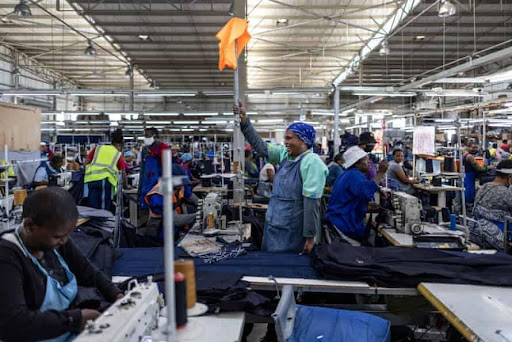
The day after Donald Trump announced sweeping global tariffs, Lesotho’s garment workers feared for their jobs.
Last year, Lesotho sent about 20% of its $1.1bn (£845m) of exports to the US, most of it clothing under a continent-wide trade agreement meant to help African countries’ development via tariff-free exports, as well as diamonds.Now, all that is at risk, after the US president imposed a 50% tariff on the impoverished landlocked country, which he claimed last month “nobody had ever heard of”.
Makhotso Moeti moved to Lesotho’s capital, Maseru, from the rural centre of the tiny mountainous kingdom entirely surrounded by South Africa. “Factory work is the only job I’ve known for many years,” said Moeti, who attaches labels to Gap clothing. “If the factories shut down, I won’t have many options left. I’ll be forced to return home to the very poverty I thought I had escaped when I moved to the city.”On Wednesday, Trump unveiled what he claimed were “reciprocal” tariffs, overturning decades of global trade policy.
The tariff rates, which are due to come into force on 9 April, range from 10% to 50% and were calculated with what economists labelled an “idiotic” formula, penalising countries that have the highest trade surpluses with the US relative to their imports from the US.
Dr Ratjomose Machema, a lecturer in economics at the National University of Lesotho, said: “I don’t understand how this is a reciprocal tariff because we really don’t charge that much in tariffs.”
Lesotho, which has a population of 2.3 million, was hit with the highest rate. In Africa, it was followed by Madagascar, a vanilla exporter, with a tariff of 47%; Botswana, a diamond producer, on 37%; oil-rich Angola with 32%; and the continent’s most industrialised economy, South Africa, on 30%.Like the hard-hit, south-east Asian economies, the poor majority in these countries cannot afford expensive American products. In recent decades, China has overtaken western countries to become the largest trading partner of most African countries.The future of Agoa, which will expire in September if it is not renewed by the US Congress, was looking precarious even before Trump’s announcement.
Lesotho’s trade minister, Mokhethi Shelile, said officials, who had been preparing to travel to the US to ask for an Agoa extension, would argue that the tariff calculations did not include digital services from US companies such as Android and Microsoft.He added: “That being said, we recognise that we cannot rely solely on the American market.”
A fact sheet published by the White House to accompany Trump’s tariff announcement said: “Today’s action simply asks other countries to treat us like we treat them. It’s the golden rule for our golden age.”
In Lesotho, Nthabiseng Khalele, a garment worker sheltering from the rain after a long day in the factory, said: “My hope and wish is that our prime minister could somehow reach out to President Trump and ask him to at least show some compassion for Lesotho. If we lose our jobs here, I’m almost certain that many of us will end up sleeping on empty stomachs.”
Trump dismisses criticism of tariffs, claiming US makes $2bn a day from levies – US politics live
“Under the First Amendment, if the Government opens its doors to some journalists—be it to the Oval Office, the East Room, or elsewhere—it cannot then shut those doors to other journalists because of their viewpoints,” US District Judge Trevor McFadden, a Trump appointee, wrote. “The Constitution requires no less.”
The ruling comes nearly two months after the White House first barred an AP reporter from the Oval Office over the outlet’s decision to continue using the term “Gulf of Mexico” after Donald Trump issued an executive order renaming the body of water the “Gulf of America”.
The government has a week to respond to the ruling.Wall Street closed today on another day of falling stocks, after US markets opened at higher levels this morning. The S&P fell 1.6%, wiping out an earlier gain of 4.1%. Meanwhile, the Dow Jones lost 0.84% and the Nasdaq composite dropped 2.1%.
During his speech, Trump addressed criticism of his tariff policy, saying that the United States is making $2bn a day in tariffs. He added that Japan and South Korea are sending representatives to the US to make a deal to avoid the tariffs Trump has levied against them.
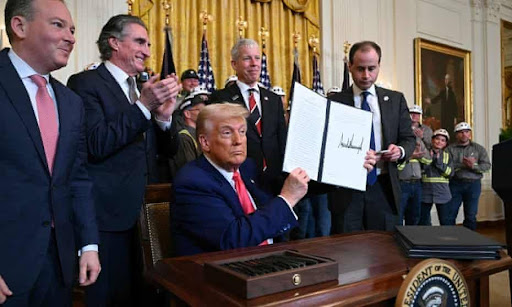
“America is going to be very rich again very soon,” he said.The first directs all departments and agencies to “end all discriminatory policies against the coal industry” including by ending the leasing moratorium on coal on federal land and accelerate all permitted funding for coal projects.
The second imposes a moratorium on the “unscientific and unrealistic policies enacted by the Biden administration” to protect coal power plants currently operating.
The third promotes “grid security and reliability” by ensuring that grid policies are focused on “secure and effective energy production” as opposed to “woke” policies that “discriminate against secure sources of power like coal and other fossil fuels”.
And the fourth instructs the justice department to “vigorously pursue and investigate” the “unconstitutional” policies of “radical leftist states” that “discriminate against coal”.
A true trailblazer’: designer Perri Cutten remembered for her enduring mark on Australian fashion
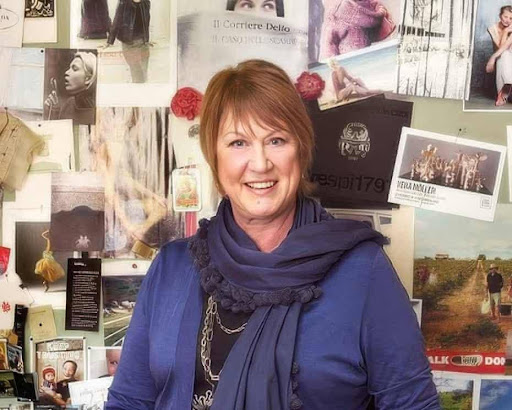
A few years ago, a friend lent me an ankle-length navy coat by Perri Cutten. It was the middle of the pandemic and having hastily returned to Melbourne from Paris, I had left my winter wardrobe behind. The vintage coat was one of Cutten’s signatures: 100% merino wool, double breasted with a raglan sleeve. It made me feel powerful but feminine so much so that when my wardrobe finally arrived, I didn’t want to give it back.Cutten, who passed away on Friday 4 April, established her eponymous brand in Melbourne in 1981, opened her first boutique in Armadale the following year and had decades of success designing clothes for generations of corporate Australian women.
“Women had just become part of the workforce in a much bigger way than they’d been,” she told the fashion editor Janice Breen Burns in 2011. “That’s what we did; designs that would help [women] fit in and feel feminine but not look silly.”Burns remembers Cutten as a warm, funny, genuinely admired woman. Along with Margaret Porritt of Feathers and Anthea Crawford, “she was among the first designers of her generation to shift left of the ideal young, slim, high fashion consumer into broader collections that fit the realities of women’s body shapes,” she says.
Over the years, the brand collected accolades including four awards from the Fashion Industries of Australia and a Woolmark Award for Excellence. In 1998, Swinburne University – where Cutten studied graphic design – awarded her an honorary doctorate.
Kellie Hush, CEO of Australian Fashion Week, recalls growing up in Canberra and being “very aware” that the Perri Cutten store in Manuka was where the diplomats and politicians shopped. “It was a brand that represented ambition and success to me,” she says. “Launching a fashion brand in the 1980s took a lot of guts and ambition. Perri Cutten, was a true trailblazer herself.”At its peak the business had a dozen stand-alone stores and 20 Myer and David Jones concessions. Eight boutiques remain (including ones in Armadale and Manuka) and the brand is still stocked by David Jones.
“Perri Cutten remains one of David Jones’ most loved brands,” says Bridget Veals, the department store’s executive general manager of womenswear, footwear and accessories. “It is a great Australian brand built on a legacy of great cuts, modern fabrications and the ability to meet the changing needs of women’s wardrobes through the decades.”
Over the weekend the Perri Cutten fashion house posted to Instagram: “May she be remembered for her pioneering spirit, her impeccable eye, and the enduring mark she left on Australian fashion.”